§ 5. Rekindling the metaphysical fire
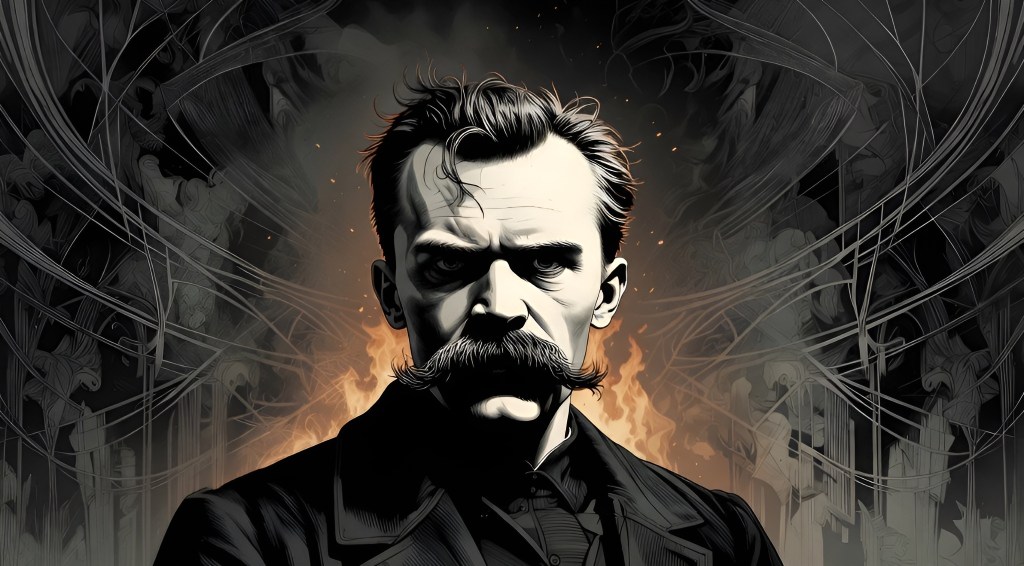
Metaphysics looked cooked once Plato’s eternal Forms were exposed as a catastrophe. Scientific materialism, logical positivism and later postmodern skepticism delivered what seemed the final blows, leaving only a flattened ontology incapable of addressing existence’s deeper currents. But I propose we rekindle it — not as a realm of static ideals, but as a living, dynamic process animating the elemental strife of creative destruction and coming to presence.
At its core, this revival asserts that everything shares fire’s nature: flickering, voracious, transformative. Earth represents the illusion of permanence and rigidity. Water and air embody dissolution, flow and generative emptiness. We are mostly water — fluid and life-sustaining — yet fire is our ontological truth. Existence eternally cycles between earthen stability and fiery becoming. Danger arises when minds harden into earth under the pressure of objectification, cult of standing reserve or collective memory loops that reduce people to resources and weaken our cetanā — the cleansing power of choice.
This hardening is accelerated by scientific materialism, fixated solely on measurable, revealed surfaces, which strips existence of its hidden generative depths and reduces the world to a manipulable grid. The Mouse Utopia experiments offered a grim warning: When every need was met, both social bonds and individual vitality collapsed into decay. Pure rigidity conceals the fire.
The rekindling draws together Nietzsche’s will to power, Heideggerian releasement, Sartrean freedom and Ñāṇavīra’s insights. An especially sharp irony is that Nietzsche spent most of his career attacking metaphysics — ridiculing Plato’s “true world,” proclaiming “God is dead” and wielding a philosophical hammer against every supersensible backworld. Toward the end, though, in Thus Spoke Zarathustra and notebooks assembled as The Will to Power, he unwittingly erected one of modernity’s grandest metaphysical edifices: reality itself as volition — endless striving, self-overcoming and creative destruction. He demolished the static being, and, in its place, offered a metaphysics of pure becoming.
Heidegger saw this but was too quick to declare will to power the completion and exhaustion of metaphysics. When refined by the mystery of forgetting (lethe) and complemented by Heidegger’s own releasement, Nietzsche’s dynamic core gains new vitality rather than marking an end. Sartre’s “look” shows how bad faith traps us in false being — unless we intensify cetanā to sever causal chains and secrete nothingness in the collapse of superposed potentialities into actuality. And Ñāṇavīra’s reading of volition as existential nutriment completes the synthesis.
This rekindled metaphysics transforms ontology into a living flame. Being does not rest — it burns in the abyss of becoming.
Read § 6. Fractal metaphysics: Mind as reflection of physis. (Re-membered with the previous § 7, March 2026)

 Rob Robill