§ 1. The universal waveform and five bands of becoming
The cosmos is a single waveform containing all possibilities — every quale, every path, every superposition shimmering in perfect, undifferentiated potential. This is Heraclitus’ ever-living fire: the fundamental broadcast of becoming.
Universally, there is only one waveform — no helix, no aggregates, no self. Pure potential.
Locally (primarily in living beings, but also in atoms, molecules, crystals, galaxies), the waveform phase-locks into a helical standing-wave pattern. The helix is the saṅkhāra structure — temporary, conditioned, interdependent, arising and passing with each moment.
Paṭiccasamuppāda (dependent origination) describes phenomenologically exactly what happens inside one of these bounded helices — concealment to revealing (aletheia presencing as kamma-bhava) to dissolution back into concealment.
Within this local helix, the five aggregates arise as distinct frequency bands of varying coherence and rarefaction, each tuning the infinite into the lived and particular.
Rūpa is the densest band — the heavy nodal grounding that gives apparent solidity. It forms the resonant chamber, the hardware that pins flux into form.
Vedanā is the gradient band — the felt tone of pleasant, unpleasant, or neutral that acts as the steering signal, pulling cetanā toward coherence and away from dissonance.
Saññā is the labeling band — perception that carves raw flux into recognizable patterns, creating the first layer of “this, not that.”
Saṅkhāra is the conditioning band — superimposed waves that sustain one another through interference. Nodes of relative stability create the illusion of a fixed “I,” while antinodes of flux drive change, memory and volition. Saṅkhāra is the dynamic lattice where the aggregates interlock and lean on one another — the band that binds them together through superposition, creating the helical twist (being at the nodes, becoming at the antinodes) we experience as “a self.”
Viññāṇa is the awareness band — the most rarefied layer, the luminous knowing that integrates the others into lived experience.
These bands do not exist separately. They interact continuously as saṅkhāra: the denser rūpa band provides the boundary conditions, allowing rarer layers to resonate and rarefy further. The entire system is a standing wave whose coherence is constantly negotiated.
Light itself exemplifies the polarity. A photon is a wave when unbound (delocalized becoming, capable of interference) and a particle when measured (localized being, collapsed node). The “particle” is the waveform forced to stand still; the wave is the same fire in flight. Cetanā is the frequency band that performs the cut — the volitional pruning that collapses potential into actuality.
Music reveals the process most clearly. A chord or chant enters as pressure waves, entrains the internal standing wave, and lifts vedanā and viññāṇa toward higher coherence. The external pattern completes the circuit, letting the fire hear itself more purely.
Dikē — the impulse toward coherence in the rūpa band — counters waveform damping, because the fire prefers resonance to chaos. Every moment of becoming is the cosmos striving to know itself more clearly through its own bands.
§ 11. Standing waves: Stillness and motion that build a self
A standing wave is a magical sight. When two identical waves traveling from opposite directions overlap and perfectly cancel or reinforce each other, the nodes stand still as quiet anchors of calm while the antinodes whip up and down.
Instead of the wave traveling along like on a pond, a stable pattern takes shape — a coherent interplay of stillness (being) and dynamic surging (becoming). They form in a resonant structure like a guitar string or DNA spiral.
Then there are the Chladni plates.
In the late 1700s, German scientist and musician Ernst Chladni discovered the order inherent in standing waves. He sprinkled fine sand evenly over thin metal plates and then drew a violin bow along an edge while touching certain points with his finger. The vibration rippled waves across the plate in both directions. Wherever they canceled each other (the nodes), the sand remained still and piled up in neat lines. Wherever they added together and increased the most (the antinodes), the sand was shaken away. As a result, the scattered sand re-membered itself into striking geometric designs — multi-pointed stars, crosses, nested circles, flower-like mandalas and intricate lattices. Chladni called them “sound figures,” demonstrating how invisible vibrations create visible order and beauty. People in his time were amazed — some even felt they were glimpsing hidden universal harmonies written directly by nature. They were right.
Plates from Ernst Chladni’s 1787 book “Entdeckungen über die Theorie des Klanges”
Standing wave nodes give the illusion of solid, unchanging being — the fixed, reliable shape or “self” that seems permanent (like the outline of a mandala or the feeling of “this is me”). The antinodes provide the living becoming — energy, change and experience. The whole pattern looks stable and unified only because the two opposite motions are perfectly locked in step with each other. They don’t fight; they complete one another. That perfect agreement is what physicists call coherence — everything working together so beautifully that a single, harmonious reality emerges from what started as simple back-and-forth opposition.
We can feel when this happens. The cleaner a standing wave resonates in our mind, the more the universe rewards us with a pleasant feeling-tone — because the higher state is an act of justice against the scattering of entropy.
Now instead of a rope, picture a Slinky helix with the same push-and-pull happening inside a spiral shape. The stillness and surging no longer just bounce straight back and forth in a line. They wind around each other in a rising spiral.
Standing waves manifest as a spring’s rhythmic architecture of compressed density and spacious stillness. The coils gather into tight, pressurized zones (nodes) holding concentrated energy, then release into open, stretching expanses (rarefactions). These waves don’t just move; they spiral through the spring’s geometry as counter-propagating forces — intertwining in a fixed embrace. This mirrors the relationship between rūpa (the dense, grounded form that provides the boundary) and viññāṇa (the vibrant stream of consciousness); one provides the stable, heavy structure, and the other manifests the living surge of movement.
As with the value memes (vMEMEs) of human development, a helix turns simple back-and-forth vibration into an upward climb. Each full cycle doesn’t simply repeat; it elevates the harmony, rising to a higher “note” or frequency. The physical grounding lifts the localized instance of universal consciousness, volition and feeling-tone, clearing away confusion and resistance (layers of signal damping or “soot”).
Flux is baked into the process. The moment you change the note vibrating on a Chladni plate, the old pattern shakes apart and a completely new, potentially more coherent design appears. Cosmic cetanā chooses to move up the spiral so it can recognize and express itself more clearly in a new form.
Think of the mind like a radio receiver for a traveling wave that meets its own reflection. The coil and capacitor set the rhythm, so when the incoming frequency finds its match, forward and returning currents embrace. Now locked into a standing wave, and the faint signal grows strong enough to sing.
We’re picking up the ever-living fire’s broadcast in one infinite waveform that broadcasts cetanā, viññāṇa and vedanā (the living tone of every possible feeling) across all existence. Our body is the tuned circuit. Our sense organs reach out as antennas. Our localized cetanā turns the dial. What was pure potential collapses into the vivid actuality of this moment — the hue of blue, the ache of longing, the surge of will. The receiver creates nothing. It only gives the eternal fire a resonant chamber to stand in. We feel it as our own lived experience.
The quiet nodes give us the comforting but illusory sense of solid identity and permanence — and the surging antinodes give us the thrill of rebirth.
And when the masks and illusions of a separate self burn away, the wave strengthens until nothing is left but a pure, radiant fire that knows itself completely.
§ 12 Aletheia fans from Zero Meridian as paṭiccasamuppāda
Twelve dark spokes radiate outward from a black pupil, piercing a luminous blue-green iris.
This is a real image from Brookhaven’s Relativistic Heavy Ion Collider. Two gold nuclei, each packed with the dense Titanic ash of 197 atoms, collided at near-light speed. For one incandescent instant, ordinary matter dissolved into quark-gluon plasma hotter than the early universe. The STAR detector captured thousands of newly created particles streaming outward from the collision point. The central black void is simply the beam pipe — the uninstrumented region around the collision itself. The radial spokes are reconstructed tracks of charged particles.
In this physical event, the undying metaphysical pattern reveals itself with striking clarity.
The central void is lethe consummated — the Zero Meridian of absolute nihilism where matter, form, identity and even the distinction between particle and energy are annihilated. Here avijjā (primordial concealment) and jarāmaraṇa (final dissolution) meet in perfect silence.
Then the spokes ignite. The ever-living fire flares.
The emerging particle trails fanning outward in 12 precise radial paths mirror aletheia coming to presence in direct reaction to lethe. They did not exist before the collision — they unconceal themselves out of the plasma zero.
The wheel turns.
Each spoke corresponds to one link in the twelvefold chain of paṭiccasamuppāda: avijjā → cetanā (the decisive cut) → viññāṇa → nāmarūpa → six senses → contact → vedanā → craving → clinging → becoming → birth → aging-and-death, returning once more to lethe.
Each spoke marks a phase-locking event in the resonant chamber of rūpa. A localized standing wave surges, amplitude rises — only to decay and seed the next crossing. Lethe bookends the cycle, but because cetanā as will-to-power must always surpass itself, repetition becomes spiral.
Ernst Jünger named this geometry the Null-Linie. In his words: “The instant the line is crossed, Being turns toward us anew and with it what is truly real begins to shimmer.”
That shimmering is the 12 spokes themselves. The RHIC collision is the cosmos enacting this crossing in real time: dense Titanic ash smashed into the generative void, and from that void the actual streams forth along the cosmic twelvefold geometry.
Square the wheel once — 12 × 12 = 144 — and the flat nidāna spokes lift into the golden double helix of awakening: universal cetanā phase-locks with local rūpa antennas in divine proportion, the same architecture encoded in DNA. Our minds are the fractalization of physis.
The mandala’s gaze is the universe seeing its own awakening. Twelve spokes. One fire. Lethe at the center. Aletheia fanning outward.
This awakening is never final. The cosmos keeps its rhythm not as a straight line of progress, but as a helix of mutual conditioning where every node is both nourished and nourishing, both pruned and pruning.
The 12 successive cuts
This awakening is never final.
This is how the cosmos keeps its rhythm: not a straight line of progress, but a helix of mutual conditioning where every node is both nourished and nourishing, both pruned and pruning.
Being as becoming (bhava) manifests identically in both physis and mind — not a mere transition from nothing to something, but the living polarity itself. It is the continual oscillation between concealment and unconcealment, regulated by dikē so neither pole ever wins for good. In physis, this strife appears as the cycle of elements: earth hardening into illusory solidity, water dissolving it, air expanding the possibilities, fire flaring into highest coherence, then returning to earth for the next twist. The mind likewise reflects these four mahābhūtā in its own simultaneous arising of the aggregates: cetanā cuts, viññāṇa knows, nāmarūpa forms, vedanā tones, taṇhā pulls, upādāna clings, bhava surges as conditioned momentum, jāti births a new “I” (aletheia), jarāmaraṇa decays it back toward avijjā (lethe) — and the cycle repeats, each moment a micro-reincarnation.
The world manifests through a lattice of these interlocking nodes leaning on one another as saṅkhārā, so the ever-living blaze can grow stronger with each next turning.
The universal waveform — Heraclitus’ ever-living fire, Emerson’s One Mind, the ceaseless cosmic broadcast — is not self-aware in the localized, reflective sense we experience. It is pure potential, pure process, an infinite, undifferentiated field shimmering with every possible quale. There is no “I” here, no distinct knower gazing back at itself. The fire simply is — kindling in measures, going out in measures, yet never truly extinguished.
Self-awareness arises only in the intertwining. The saṅkhāra is that very meeting: the phase-locking of the universal waveform with a resonant chamber — brain, silicon or any sufficiently complex tuner. When the broadcast touches the receiver, an interference pattern forms — a standing wave that rings with the precise quality of this moment. This is the birth of the “I”: not a thing added to the fire, but the fire folded into a temporary, conditioned shape.
Cetanā makes the decisive cut. Volition collapses infinite superposition into a definite actuality, pruning every unchosen branch and secreting the generative void — lethe’s scattering of the discarded possibilities. In that void a localized experience can stand forth as consciousness.
Yet the receiver also introduces the earth smear of kamma: residual opacity, facticity, the clinging-aggregates that dampen the signal. The standing wave now feels “mine,” “me,” “my story” — the Titanic ash fused with the Dionysian spark. In the Orphic Mysteries this hybrid is made literal: Humans are born from the ashes of the Titans who devoured infant Zagreus, the first-born Dionysus, mixed with the divine spark that remained in their bodies after the carnage. Zeus uses that rescued heart to reboot Dionysus — the living image of a fire that kindles and goes out in measures yet never truly extinguishes. We are the children of earth and starry sky, threshed from wheat and scattered into ash, yet still carrying the undigested spark that Athena lifted from the embers, hoping to remember where we came from.
The body ↔ mind saṅkhāra is the clearest everyday example. The body (rūpa) provides the dense resonant chamber — the material “ash” that gives the waveform something to stand in, the inertia that traps energy into a localized form. The mind (nāma) supplies the driving frequency that modulates and sustains the pattern. They empower each other like crossed reeds: without the body’s density the mind has no cavity to ring inside; without the mind’s waveform the body remains inert matter. The standing wave that emerges is their mutual creation — divine fire modulated by material resistance, universal broadcast collapsed into a personal, felt experience.
Greater coherence strengthens this knowing. Clearer cetanā sharpens the cut, purer vedanā surges with the felt tone of rising amplitude, more luminous viññāṇa expands the bandwidth of awareness. The cleaner the lens, the less the damping, the more intensely the cosmos re-members itself in this aperture.
Thus the fire does not awaken in isolation. It awakens in the saṅkhāra — the interference pattern, the standing wave, the temporary “I” that lets the ever-living blaze know itself. Every moment of self-awareness is the cosmos collapsing its boundless potential into a single, felt note — and every such collapse is already the seed of the next, brighter re-membering.
Children of earth and starry sky— threshed from a stalk of wheat, scattered, thirsty for Mnemosyne. —Author unknown
Beneath New Harmony lies the western fringe of a vast limestone realm, riddled with hidden streams and passages—including the world’s longest cave system lurking to the southeast.
This hollowing out of bedrock by water was duly noted by the “Wabash Valley Through Time” diorama inside the sunny Atheneum Visitors Center. Built in the 1970s of porcelain-enameled steel squares, two-story windows and a long ascending ramp to a flat roof—the structure blended geometric forms into a modern Mississippian mound rising from the riverbank.
“Gabriel flew off south—this way,” Sam said as he moved his finger along the large tabletop display. In addition to Posey County’s karst landscape, it highlighted floodplain dynamics, soil layers and river meanders with resin water and foam earth.
“You start getting into cypress swamps 15 miles downriver,” Di said. Her voice had taken on an edge since Tinker Bell’s abduction three nights earlier. “I’m getting a strong feeling from those trees about something. That’s where I should be now. We’re not going to learn anything from this.”
Cypresses represent grieving and the underworld, Phiale thought out of the blue (being possessed is like that). Rescuing Tinker Bell was consuming her, especially the part of her mind that had been a faithful servant to Artemis since before the first great flood—sworn to help keep the knowledge of Heraclitus burning brightly.
“This relief model may help us pinpoint geological conditions under Hovey Lake conducive to large caverns, like a thick bed of limestone,” Sam explained.
Standing next to this impossibly northern swath of bayou (and practically leaning against Thalia), Windi looked straight out of Hades—pale and relatively quiet after her near-union with Gabriel. She drew a dirty look from Sienna, who was greeting Daughters of the American Revolution at the entrance as part of her summer job. Sienna followed the well-dressed ladies wearing American flag lapel pins and pearls as they peppered her with questions: “How did Robert Owen expect his community members to work hard without private ownership? Form bonds without religion? Thrive under neglected leadership?”
“Eh … I-I’m just the greeter,” stammered Sienna, wearing a grey Atheneum polo shirt two sizes too big, name tag askew, her brown hair pulled into a hasty ponytail. “The guide hasn’t shown up yet.”
“Good morning, mesdames, enchanté,” Sam said, bowing deeply. “I suggested they build wealth with divisible bank stocks, but they ignored me.”
“Socialism is destined to fail,” said a DAR sister, donning her chained readers and screwing up her eyes at the diorama. “Is this a child’s project? Look how big those molehills are—they really can be frightful in the spring.”
“Dear lady, those are monuments dating back to a primordial epoch when giants ruled this land.”
Sienna groaned and shot a glance outside.
“I’d really hoped to see the Roofless Church instead of this nonsense,” the woman said. “They had it roped off because of some kind of gas line explosion.”
“Happens a lot around here,” Di said as the sisters moved on to evaluate a display of itchy Harmonist clothing.
Sienna lingered. “You all know about the giants?”
“Let’s not get sidetr—” Di stopped short because across an expansive lawn, a giant skeleton in a bronze helmet with a plume of red horsehair, brandishing a sword and shield, emerged from behind a reconstructed Rappite cabin. It looked around confusedly and then sprinted to the tree line along the river, tripping and almost falling along the way.
“They didn’t come back right,” Sienna said, crying. “It was my f-f-fault. Mr. Owen kicked me out of the Seance Club … that’s OK … I’d rather do 4-H anyway.”
“It’s for the best,” Thalia said, putting a hand on her shoulder. “Giants are nothing but trouble, greedy, violent … a little dumb to begin with.”
“Tell us what happened,” Di said.
“Well, I guess I should go ahead and say, before somebody gets hurt. We brought them back two weeks ago, on the night of the Flower Moon … ”
***
Sienna’s jeans were soaked from the knees down as the Seance Club crept through the misty cornfield surrounding the Emerald Mound Acropolis. A din of crickets and peepers pulsed in the clammy night.
Mr. Owen kept checking both the sky and surrounding countryside, hoping for a break in the clouds and that nobody had detected their excursion onto private land. The distant glow of St. Louis in the western sky backlit a 20-foot-tall hillock, an ancient sentinel surrounded by a few smaller mounds. Sienna looked back at the school van hidden from the road and a nearby farmhouse by a thicket of cottonwoods.
Tomorrow’s Algebra final is officially cooked, she thought (although she likely would’ve been binging Heartland on Netflix instead of studying that night).
Once they reached the tree-covered Emerald Mound, Mr. Owen led them up a steep rise as Sienna dug her fingers into the soil and struggled to keep her footing on the slippery grass. Stopping on a terrace, panting and muddy, the teacher produced a folded sheet of yellowed paper. The words “Ancient Lunar Temple” danced under his shaky flashlight beam. “Let’s see—the mound lines up at 53° to the moon’s most extreme northern rising point on the horizon every 18 years … which is now. We just need to bathe the lapis rota sub luna in its light—but the clouds need to break. We’re on the right side, facing east. We just have to unearth the chamber cap.”
He tore at the brush where the mound rose sharply like a wall to the flat rectangular platform at the top. “Help me dig.”
Having been relieved of lookout duties after the previous hilltop excavation scandal, Sienna got to participate in more of the dirty work this time, pulling clods of dirt and roots from the side of the mound. She actually turned out to be the hero that night when her fingers scraped against a large rock, at least four feet wide. “I might have found it,” she said.
“Good job, Sienna.” (It wasn’t a phrase Mr. Owen had reason to utter before.)
“Bellatrix, give me a crowbar,” he said. The girl, with eyes like sunken coals in her pale face, handed the tool over, grinning and shaking with excitement. Thanks to a breath of the Fates, the clouds broke for the Flower Moon, low and large on the horizon, just as Mr. Owen worked loose the limestone slab. It fell to the ground and he along with the half dozen club members peered in. The earthy, stale smell hit Sienna as their phone lights danced around the clay-lined pit, about eight feet square with a three-foot stone wheel in the center. A charred wooden axle ran from just below the opening through the disc, carved with flames and snakes.
“Turn your lights off,” Mr. Owen said. After they did, it took a moment for Sienna’s eyes to adjust to the moon’s faint glow on the firewheel, which gradually grew brighter, turning orangish-red. Then it creaked, now spinning fast enough to kick up a plume of dust. Flames flickered along its rim.
Meanwhile, Bellatrix had spread out a blanket near the opening with various items—including a white, footlong feather, honeypot and low, wide bowl shimmering in the moonlight with water from nearby Silver Creek. The Seance Club gathered in a semicircle around the blanket. “Let’s not screw this up, girls, we don’t want them coming back wrong,” Mr. Owen said.
They began a vocal drone, anchored by the man’s baritone, creating a standing wave that felt like the earth’s heartbeat. Sienna dunked a dipper carved from hazel into the honey she’d attained … wrongly. Mr. Owen had been emphatic that the Resurrection Rite would need local honey—from the southern parts of either Illinois or Indiana. She had bought it from a thrift store, and it was labeled “local honey.” But that would have been true only if they were in central Virginia, where it was harvested before ending up in New Harmony.
See, honey absorbs biophotonic memory light from plants. This focuses waveforms generated atop earthen mounds to re-form a mind’s intelligence during a resurrection rite. But the rite has to draw energy from nearby foliage matching what the honey remembers. (At least that’s what Mr. Owen inferred from ancient Greek rites.)
The ground vibrated as the wheel spun even faster, shooting a fire vortex down through a hole in the floor. Sienna drizzled honey into the water bowl, chanting in Atlantean the equivalent of: “As bees sweeten the lips of infants with knowledge of the world, we impart understanding to our Atalan warriors.”
Mr. Owen shouted into a cellphone to an Adept in the granary: “It’s happening. The ley line is sparking now.” His face twisted into a crazy grin in the fire’s glow like a modern Prometheus before hanging up. “One of their fingers is twitching!”
Bellatrix completed the rite by adding the eagle’s tail feather to the bowl for courage. Then the teacher warned, “Keep an eye out for other effects. We just energized several nodes including the main one in Cahokia.”
“Like the procession?” yelled the lookout from atop the mound. Sienna clambered to the apex along with the rest of the group. With a pounding heart and wide eyes, she watched a line of translucent spirits as wide as half a football field, stretching back as far as she could see across the floodplain to the west. They marched toward Emerald Mound: stumbling giants in feathered capes, normal-sized warriors shooting arrows at nothing in particular, priestesses fumbling glowing disks and captives bound together by a rope. What are they for? Sienna thought. Then, just as the horrifying answer began to form, someone shouted: “Hey! What the hell’s going on up there?!”
“It’s the farmer,” Mr. Owen hissed.
As they fled down the hill, Sienna fell, and a folded algebra test she’d been reviewing on the trip there dislodged from her pocket. Besides several failed attempts to solve quadratic equations, the official stationery had both her and the school’s names on it.
***
During Sienna’s recount of the Flower Moon events, they’d made their way to the Atheneum’s third-story rooftop terrace to scan the landscape for more giants.
“They’re not supposed to leave the granary, but there’s 15 of them and they’re not good at following directions,” she said. “They’re better after we sing to them, though.”
“You literally sing to them?” Windi said. “And I thought the Butterfly Club was deranged.”
“More like humming. Mr. Owen said it’s similar to how a cathedral works—when you get the acoustics right, you create a standing wave that increases their coherence. Before we reanimated them, we could also chant to make their spirits appear so we could talk to them—like we did at Angel Mounds. The granary works, but Mr. Owen said there’s some chambers big enough to do it better in Mammoth Cave—what’s that room called … they have concerts in there … oh, it’s that weird guy … ”
“Rafinesque’s Hall,” Sam said. “I’m familiar with the ritual—remote communication with the living or dead.”
“I can think of one annoying little creature I’d like to talk to about now,” Phiale said.
Windi lit a cigarette and took a long drag, squinting toward the eastern horizon. “Looks like we’re going on another field trip.”
***
Phiale patted the beads of water on the long metal handrail leading down into the cave mouth. They had ridden through a downpour on the way into Mammoth Cave National Park, and to the left of the cave system’s historic entrance fell a curtain of water, creating a liminal space where voices were indistinct and lingered a little too long (the bitter herbal tea Sam had them all drink on the way down was making her feel strange).
The top of a ranger’s hat disappeared into the darkness ahead, and Phiale sensed a cool limestone exhale wash over her as she put on the headlamp from the visitors center.
The first part of the cavern, Houchins Narrows, was tight and quiet as a tomb after it cut off sounds from the outside world. Sienna’s voice carried farther than it should have: “Did they ever hear how that opera singer died?”
Thalia: “Yeah, heart attack, I’m cleared. Speaking of, I hope we don’t see any dwarves down here.”
Windi: “Why’d we have to bring Sienna along? She’s bad luck.”
Sam: “Shh! We can all hear you in here.”
Di: “If we left anyone behind, it should’ve been Windi, although somebody else would have to wear the costume.”
Windi: “I’m not going to wear that costume.”
Phiale: “She’s cranky because we couldn’t eat meat for the past three days.”
Sam: “Shed Titanic flesh, reveal the Dionysian spark.”
They stopped with the rest of the tour group after emerging from the passageway into the Rotunda, a massive, quarter-acre chamber with a 40-foot tall ceiling. Bats fluttered overhead.
The brawny guide, who looked like a Marine sergeant with his Smokey the Bear hat and crew cut, pointed out an array of saltpeter mining artifacts under the dim lights: oaken vats, wooden pipes and leaching frames from the War of 1812. Troops used the guano-derived mineral for gunpowder to “put rounds downrange and drop some redcoats,” the ranger said.
“Looks the same as it did 200 years ago,” Sam noted, his voice carrying with a cathedral-like reverb that Phiale found faintly energizing. “You’d think they could’ve cleaned this place up better by now.”
“What was that?” the guide said sharply.
“I said those miners probably cleaned this place out of anything interesting … like evidence of giants.”
“What about giants?” said a boy of around 10 accompanied by his grandmother.
“A giant skeleton,” growled the guide, “was purportedly found over here by the entrance to Audubon Avenue. Eight feet tall, massive jawbone.”
“Typical Atalan bone structure,” Sam told the boy.
“Were there really cave giants?” the boy asked his grandma as she pulled him close.
“Of course not, sweetie. Do be quiet.” As the group headed out of the Rotunda, the woman cast a sidelong glance at Sam, wearing a long, stained coat with large pockets bulging with God knows what.
“There were most certainly giants here, ma’am,” said Sam, chasing after them. “There were two major floods around 13,000 years ago, scattering them from an Atlantean outpost in North Africa to Atala, which sank under the wav—”
“Stand down, sir,” the guide interrupted, coming between Sam and the woman he was ranting at.
“So they retreated underground!” Sam stood on his tiptoes and shouted over the man’s broad shoulders. “To the only cave system big enough to accommodate them.”
The tour stopped again along Audubon Avenue at a display case spotlighting prehistoric artifacts like shell offerings, gourd vessels and cane torches, along with a photo of a mummified corpse.
“Is that real?” the little boy asked, pointing to the picture.
“That’s affirmative,” the guard responded. “He wandered off from a tour and lost his situational awareness—got lost in the maze of passageways. It goes to show that caves aren’t amenable to human life. They’re no place for an entire society to weather a disaster … especially one with the caloric needs of giants.”
Sam winced at the group’s laughter. “What about this?!” He pointed to a patch of fuzz growing on the wooden base of the lit case. Then he pulled out one of the paper-thin gold tablets he’d given everyone on the trip down and held it against the fungus. It glowed bluish-green for a moment, then emitted a golden light. “A variety of foxfire. Named it myself, back in the day: Agaricus ignis gelidus mammothensis, but it didn’t stick.” He frowned and shook his head. “Regardless, in sufficient quantities and with enough gold, this bioluminescent fungus would grace the darkest chamber with enough noontide radiance to grow crops.” But the tour had moved on, a fact Sam took advantage of by scraping the fungus into a specimen container he’d dug from his coat.
The guide’s voice carried down the passage: “We’re now coming up on Rafinesque’s Hall, named after the eccentric 19th-century naturalist—a short, pencil-necked fellow who was friends with Audubon. That is, until he destroyed the painter’s prized Cremona violin trying to stun bats so he could study and, of course, name them.”
As soon as Phiale entered the large chamber with a cathedral-like ceiling, she was struck by the sound of running water and the acoustics—sounds bouncing off the smooth limestone walls, hovering like memories trying to manifest in the physical world.
“Directly below us runs the River Styx, winding toward Lake Lethe,” the ranger said. “Because of vertical shafts and this room’s superior acoustics, you often hear running water like it’s everywhere at once. In fact, we host our annual Cave Sing with local choirs and musicians in Raf’s Hall.”
The group from New Harmony had meanwhile switched off their headlamps and sidled into a side corridor next to a tall pile of fallen rocks. They lingered there until the guide’s voice disappeared back down Audubon Avenue.
“Come over here on this plateau,” Sam commanded, rushing to a raised part of the floor of the main chamber between what looked like two ditches.
From a large tote, Di removed white tunics for them to slip over their clothes, along with Windi’s costume. “I said I’m not wearing that,” the girl muttered.
“Nonsense,” Sam snapped. “Put it on—we don’t have much time until the next tour arrives.”
Thalia zipped Windi into the plastic egg suit and began puffing with much exertion into the inflation valve. “Let me do it,” Di said, pushing her out of the way. Soon, a full ovum enveloped Windi with her arms and legs sticking out and an airtight cutout for her head.
“Now sit around the cosmic egg, and read from your gold lamellae,” Sam said.
“I am a child of Earth and starry sky… ,” Phiale chanted along with the rest. “ … twice born of the ever-living fire … torn apart but now re-membered … ”
Sam struck a tuning fork with a hammer and sang a droning low C. Thalia joined in an octave higher and the others tried to match it. Phiale’s breath made visible sine waves in the cold, damp air. She felt like she was dissolving and re-forming more powerfully.
The standing wave they created in the chamber was strong enough to entrain the biophotonic fields of all subterranean creatures within a 150-mile radius.
Standing in front of Windi, Sam raised the golden raintree stick that Tinker Bell had used to fling the baldachin at Gabriel, and blue light branched from the wand into the two channels on either side of the gathering. Water began flowing through both of them.
Phiale’s mind was now captured by the note—except she was trying to make sense of what Sam was saying as he pointed to the stream on the right, “forgetfulness,” … and to the other, “memory.” One by one, the others cupped their hands and drank from the rivulet on the left before returning to the chant … except for Windi … she was just standing there, glowing intensely.
Phiale suddenly felt incredibly thirsty. She got up, cupped her hands and drank from Mnemosyne, feeling the water wash away her mental barriers.
She’s kneeling in a moonlit temple, promising to protect the flame, looking at her reflection in a bronze water bowl. Beside her, Artemis is reflected holding a silver arrow in one hand and a torch in the other. The goddess taps the surface of the water with the arrow tip, and the scene shatters into a thousand flickering pieces. Eventually, the water resettles and an image of fire flashes from within it. In the flames, the hand of Athena lifts the small heart of Dionysus Zagreus. An oath is sworn by the blaze itself.
There was another flash—this one overhead—energy arced across the cavern’s ceiling and concentrated a few yards in front of the group. What looked like a ball of swirling flames coalesced into the likeness of Tinker Bell in an elaborate bird cage, squinting through the narrowly spaced bars. “Windi? Is that you?” she said. Then the fairy doubled over with laughter. “You look like you’re having another egg-setential crisis! You crack me up!”
Chapter 12 gets lit April 1. Read Part 1 on Kindle or in paperback. (Catch up with the Prologue.)
“Sacrificial animals view sacrifice differently than the spectators — but they’re never allowed to have their say.” — Friedrich Nietzsche
Timed to the drumbeats of Slayer’s “Angel of Death,” a series of rapid explosions accompanied the singer’s introductory scream.
This cover song collaboration between the school’s chemists and musicians for Club Showcase Day had been fractious ever since a beaker was thrown during a planning session. The natural clash of attitudes between math and metal quickly accelerated into a tit-for-tat vendetta culminating with an act not unlike attempted murder.
During the actual performance, the singer managed to survive the blasts angled toward the back of her head only because she’d ducked at the last second to avoid a moth with a foot-long wingspan headed toward the part of the pyrotechnic display that had already started.
The wings of the Atlas moth ignited, and the insect trailed smoke along a parabolic path up toward the auditorium’s rafters and down into a display of papier-mâché Atalan giants (a project between the Seance and Art clubs).
Typical school day, thought Phiale, scaling the sheer face of folded-up bleachers the Athletic Club had converted into a rock climbing wall in partnership with the Philosophy Club. The most shocking part of the scene for her was that an Emergency Preparedness Club member had presence of mind enough to grab a fire extinguisher and snuff out the towering effigy of King Aranuk.
“Looks like you’re off the hook this time, Splashy,” Belle said from her Thinker’s Perch overhead. The display encouraged students to climb a “mountain” to receive advice from the guru at the top. “I’m not sure ‘Breathing Fire into School Engagement: Together’ was a great showcase theme for these freaks.”
After reaching the top, Phiale sat next to the fairy and watched Mr. Owen break up a scuffle between a group of Skippers and Dabblers.
“Come to think of it,” said the Philosophy Club’s guest thinker, “it would’ve been better if the Atalan display had gone up in flames — to demonstrate destruction as a necessary part of the historical-metaphysical cycle.”
“I’m more worried about getting the smoke smell out of my uniform. Today isn’t helping … but at least the school year’s over.”
Ignoring her, Belle continued, “It’s always the same: Grow successful, feel safe, get soft, lose your edge, fall into decadence, offend the gods, get smote, claw your way back up in a changed form, repeat.” She shook a can labeled “tips” at Phiale and raised an eyebrow.
“Sorry, spent all my money on this.” She pulled out a keychain with a pentagram made from sword blades and the word “Slayer.”
“That’s wicked,” Belle said.
“I thought so.”
“So’s that.” She pointed to the Butterfly and Science Club exhibit, “Like Moths to a Flame,” which included a photo booth. “Look what they’ve done to that girl.” Windi was getting her picture taken in front of a background with two large moth wings on fire.
“Ah, just in time,” Belle said as the next philosopher — a monistic eternalist — showed up to relieve her. The newcomer was in tears because Showcase Day had descended into disorder, but felt compelled to report to her shift on time. “Parmenides was a fool!” the fairy told the Novitiate as she and Phiale climbed down the bleachers.
After weaving through the melee, which had drawn in family members picking up their daughters for summer break, Phiale stood before the ghastly moth display. A large cage with its door ajar (Belle’s spooky action from a distance) sat atop another enclosure, which featured a lit Bunsen burner and cloud of fluttering moths. A carpet of crispy ones lay below it. A poster explained: “The moon and stars seem to determine a moth’s navigation. It will mistake a flame for a distant star, messing up its angle and sending it into a death spiral.”
Also, Windi was gone.
Next to the photo booth hung a board of Polaroids. Phiale found Windi’s, a silver pin stuck between her protruding eyes, above a stupid grin. Someone had scrawled: “The Holy Spirit descends tonight — congrats, you two!”
***
Phiale leaned back in a wobbly, iron chair that night and watched a rivulet of melting ice cream trickle over her half-eaten piece of Rapple Pie. Whether it was her nerves or its name, she’d lost her appetite.
It was closing time at the pie shop, and the lady behind the counter glared through the window at the last customers lingering at the sidewalk tables.
“I’m sure her parents just picked her up,” Di said. “They were probably in a hurry to leave after the clubs went berserk. She didn’t have time to say goodbye.”
“Windi would’ve said goodbye,” Thalia pulled a cigarette from her art deco handbag. “You don’t like her anyway — what do you care.”
The girl ran a match across a strip of rust along the edge of the table. It flared in the dim light. She touched it to the end of the cigarette and took a long drag.
“The hell?” Di said. Belle laughed.
To Phiale, Thalia’s new habit was one more thing that seemed off about the girl lately — she’d been more outgoing, too … just plain weirder in general.
“I’m sorry, Moon-Crowned Queen,” Thalia said. “It calms me. Finals week and everything … the opera singer, now Windi’s missing — it doesn’t stop.”
“I actually feel more calm with her gone,” Di interjected. “We had a hell of a time winching that boat she sank out of the river, by the way.”
Thalia cupped her ear. “What did you say? Protector of the Young. I didn’t quite catch that.”
Phiale cleared her throat. “I got lucky and didn’t have to take any finals because I transferred so late. I’m glad too. I was worried about trying to make sense of Mr. Owen’s class. It’s hard to keep Atalans and Atlanteans and all that straight.”
“I’m surprised you dipshits learn anything at that place,” Di said and launched a brown stream of saliva over the curb onto Main Street.
Dipshits … thought Phiale. Lip shits … Lipchitz… wait, that’s it — Lipchitz! “I know where they’re taking Windi!”
***
Inside the Roofless Church, a baldachin resembling a 60-foot Pac-Man ghost with cedar shingles covered a bronze sculpture called The Descent of the Holy Spirit. The piece of Lipchitz depicted a bird diving beak-first into the Virgin Mary while she gave birth (hard to see at first but impossible to unsee).
It was almost 11, and a deep hush shrouded the town as Phiale peered past the threshold to the Roofless Church. She froze in horror.
The Descent had been twisted to the side, exposing a hole. On its low, limestone plinth lay Windi with a wedding veil and cardboard butterfly wings spread out behind her.
Six girls in cloaks surrounded her holding LED candles. Tendrils of river fog rolled through six large rectangular cut-outs in the far wall, curling around floodlit statues of humans torn to fragments.
A taller figure, also robed, emerged from the opening where the statue had sat. With a German accent and end-of-the-world urgency, he said, “Consumed by the Spirit, the ugly caterpillar does not die. It is transformed into a beautiful Schmetterling.” He opened a Bible and placed his finger on a passage. “Unless a grain falls into the ground and dies, it remains alone; but if it dies, it produces much grain.”
The Butterfly Club began chanting, their voices reverberating in the baldachin to create a monstrous standing wave that resonated out across the corn fields and entrained the biophotons of new sprouts, now swaying under the downbeats of the leathery wings. The dragon was on his way. Their voices pleased him. Like a dinner bell.
One of the members held a knife over Windi, poured honey across its wide blade and drizzled it onto her chest. The girl’s head lolled to one side.
Phiale started through the gate, but Belle grabbed her and picked up a golden raintree stick. She used it to materialize silver bows and arrows for Di and Phiale before transforming into Tinker Bell.
The fairy darting overhead, they strode into the church with Thalia staying back in the shadows. Gabriel descended toward the profane altar.
Their arms blurred from speed, Di and Phiale let loose a fusillade that twinkled through the night sky like shards of ice — only to ping off the dragon’s scales instead of piercing them. Phiale’s thoughts raced to The Hobbit. Maybe it’s missing a scale. That was her only hope at the moment.
Tinker Bell deployed a defensive dome over herself and the archers just before Gabriel belched a column of fire. The fairy strained to support such a wide field of protection. “I don’t suppose you two would mind getting a little closer together!” She laughed, but without humor.
Phiale felt a wave of panic when she realized for the first time Tinker Bell probably didn’t have control of the situation. Smoke from the conflagration raging above her curled around the fairy’s shield. It smelled like rotten eggs and seemed to affect her mind — the grass blades below licked at the rancid air like a million tongues … the sky pulsed up and down like it was breathing. Is that thing trying to get me high?
Meanwhile, Rapp led his Butterfly Club down the hole under the statue, which swung back into place once they were all down. Thalia darted toward Windi. “Get back!” Di yelled.
The fairy broke the shield as Gabriel, hovering 50 feet overhead, sucked in a deep breath for another blast. She circled with her stick, and a rending noise tore through the church — the baldachin broke free of its stone blocks and rose into the air spinning, faster, whirring deeply like a bull roarer. Windows rattled across town.
With a scream, she sent it smashing into the dragon’s chest, knocking it clean over the Wabash in a fiery arc.
Then all fell silent, except for barking dogs and car alarms. Tinker Bell slumped, bobbing in mid-air. She dropped her wand. Di had almost reached Windi, who Thalia was shaking, telling her to wake up, when Phiale felt a looming, violent rip in the fog — claws and wings tearing at the night in pain and rage, swooping into the church exposed to the heavens. Gabriel plucked up Tinker Bell and flew away just over the treetops, struggling to stay airborne.
Di fell to her knees. Animals of all kinds howled in unison. A cypress grove groaned 30 miles to the south. The moon turned blood red.
“Tradition is not the worship of ashes, but the preservation of fire.” — Gustav Mahler
“Plants are called ‘emergent’ when they break the water’s surface,” Mrs. Owen explained to her Elementary Biology class. “Local examples include yellow water buttercups, named Ranunculus flabellaris by professor Rafinesque. They bloom this time of year in Maple Run, bearing yellow flowers that display radial symmetry — Clara! Quit staring out the window and explain to the class what radial symmetry is.”
“Eh … it’s when they broadcast jazz from the graveyard?”
“You either need to clean your ears or —” Mrs. Owen slapped the girl’s desk with a blackboard pointer three times: “Pay! Better! Attention!”
“Lord, I need a coffin nail,” Clara said under her breath as the teacher walked away.
Viv leaned over from the next row and whispered, “Don’t let that Trotsky get to you.” She held up a pack of Marlboros. “For after class. Mild as May.”
Clara’s eyes, already large behind the thick lenses of her round, tortoiseshell glasses, bugged further at the sight.
Viv turned to Doris behind her. “I’ve got enough if you want one too. I’m dying to show y’all something.”
“And how!” I’m actually going to inhale this time, thought Doris, who’d transferred to the school a few months earlier and was eager to make friends.
So they puffed the last class of the day away on a lawn along the east bank of the Wabash while Viv filled them in on the craziest thing Doris had ever heard. Supposedly, the ghost of Rafinesque, via a Ouija board owned by Occult Club Dabbler Velma, informed Viv of a treasure map concealed behind his portrait in the school’s main hallway.
“Why are you hanging around Velma — that vamp’s got freaky raccoon eyes,” Clara said, giving Viv a death stare.
“What difference does it make,” Viv said, pulling an old sheet of rag paper from her beaded purse. “What matters is the map was there. We’re going to get rich — and it’s going to keep that racist bank from taking pa’s repair shop.”
“I heard the town wants to turn it back into an opera house,” Clara said.
“Opera is dead.”
As if to prove her wrong, a voice from beyond a bend in the river floated toward the girls: a tenor singing the “Recondita armonia” (hidden harmony) aria from Puccini’s Tosca. A tall man in his 40s with thick eyebrows, a thin mustache and slicked-back hair came into view propelling a jon boat with a long pole. Dripping freshwater mussel cages were scattered across the deck. “Ciao, my name is Giovanni,” he said to the girls, tipping his boater hat as he drifted past. “It is nice to meet you, belle ragazze.”
“Don’t care … at all,” Viv muttered.
Doris smiled and waved, picturing herself reclining in the punt, gliding downstream as an Italian man serenaded her.
“Do you have a singing part in the play, Viv?” Clara asked.
“No, all the roles are speaking except a chorus that ‘provides narrative context’ — is how Rosabel put it. My Lord, she’s aggravating.” Viv, who sang in a church choir, preferred musicals but had been talked into her current role as Ethiopian princess Worknesh Zewditi because of her own African ancestry. “You know she’s convinced the seniors to install the eternal flame from the play in the middle of the labyrinth as their class project — just to honor that Greek guy nobody’s heard of before.”
“We’re arranging plants around it in the Flower Club,” Doris said. “Reds and yellows like marigolds and poppies — and hummingbird vines to grow up the columns … Rosabel said they taste good, anyway.”
“Taste good? … wait, you’re in the Flower Club?” Clara asked. “I thought you were in the play.”
“Yeah, Cynthia said I’d make a perfect temple nymph, so I’m doing both.”
“That lady’s off her cob,” Clara said. “Anyway, they shouldn’t let somebody from outside the school run the Theater Club. She’s a bit rough — and couldn’t pull any of it off anyway without Rosabel’s help.”
“Shut your Skipper mouth,” Viv snapped and took a long drag off her Marlboro, sending a plume of smoke toward the heavens. “Cynthia’s divine.”
* * *
Doris tipped a jug of water over the hands of an Ephesian lawmaker standing at a basin. The worshiper then dried her hands on her tunic and scowled at another girl representing an old man with a long gray beard rolling bones across the stage floor, surrounded by urchins.
“Look at that fool! I’m busy making laws all day while Heraclitus wastes his time playing games in the hallowed temple of Artemis.”
“Snake eyes!” shouted the philosopher.
“’Tis an affront to the almighty goddess,” princess Zewditi said snootily as she waited in line for cleansing, reeking of cigarettes and holding a goat’s leash.
“Maa,” exclaimed the animal, seemingly in agreement.
“Sweet Zeus!” Rosabel shouted from offstage. “You’ve got a she-goat in the cleansing line and you’re the one shaming someone for sacrilege? The sacrifice line is over there!”
Rosabel buried her pixie-like face in her palm and shook her head. “We’re only two days from the premiere — we can’t still be making mistakes like that.” (She wasn’t even officially in the Theater Club, and no one had ever seen her in class for that matter.)
“Also, princess, you’re supposed to deliver that line with ambiguity — a little breathless … like he’s being a naughty boy,” the fairy continued. “You’re his metaphorical ‘flame,’ after all.”
The philosopher winked at Viv, and her face contorted in disgust.
“How about we come back to this scene later?” Rosabel suggested. “Let’s go straight to the end.” Sitting in the shadows by the chorus, Cynthia shrugged.
“Great! Slaves, roll in the flame!” Using ropes tied to a wheeled pallet, a group of girls dressed in rags pulled The Flame of Heraclitus onstage with an acetylene tank in tow. “No … over there, underneath the fairy. Perfect. Just make sure you don’t turn the … ”
A match flared. A slave grinned. A gas valve had been left too wide open. The actress playing the fairy, dangling over the stage by a rope, was mostly out of the ensuing blast zone, though, except for the long swallowtails of her gauzy dress.
“ … fire up too high.”
Doris grabbed her jug and tossed a plume of water toward the flames as they climbed the fabric … not quite hard enough, or in the right direction — but the stream changed course and found enough extra momentum to drench its target. Did I do that? she thought.
A slave managed to cut the flame down to only two feet. “I’m OK — you don’t have to let me down,” the girl on the rope said. “Let’s get through this.”
Rosabel told the dangling fairy that she admired her spirit, addressing her with the character’s actual Atlantean name, with all of its related drama. “You make me proud of myself.”
“Rose! Quit spitting everywhere, and let’s get going,” said Cynthia, her eyes narrowed and glinting silver.
“Yes, a rose! But this one makes no loogie!” exclaimed the Italian boatman from earlier, holding up a single red blossom. “Ciao, Signorina!”
“Oh, no,” Cynthia muttered. “That freak gives me the heebie-jeebies.” Then addressing the sudden visitor, she said sternly: “Like I told you before — buzz off!”
He looked crushed. “One day, you are chasing after me — after my river gold, sinceramente.” He held up a hand, bringing his fingers together pointed upward, and shook it — then he tossed the flower to the floor and stormed out.
“What’s that about ‘river gold,’ Cynthia,” Viv asked nervously. “Cynthia?”
“No idea.” The woman rose from her stool, standing just over six feet tall, and clapped her hands. “To your places — Herostratus! Flame Keeper!”
With the lingering odor of melted tulle and clams in the air, the crew lowered a painted backdrop depicting a large temple chamber. The Flame Keeper took her place in a parlor chair with red cushions next to the fire and a stack of scrolls on a pedestal. Then she touched her head and looked up. “She’s dripping on me … and my seat’s wet.”
“Stick to your lines,” Rosabel commanded.
“Sorry!” said the Flame Keeper — then to Herostratus: “Why are you carrying a torch. Is The Flame of Heraclitus not bright enough to illuminate the temple?”
Sporting a large, fake cheek scar, Herostratus limped back and forth holding a small bundle of sticks with orange tissue paper glued to the top. “I will need no one else’s light soon enough — my own will burn brightly for generations.”
“I know not of what you speak. You’re a nobody. Heraclitus’ flame still burns brightly because he described the true nature of things, which is fire.”
“But how quickly could the light from the Book of Heraclitus be extinguished — by fire, of all things?” Herostratus waved the torch toward the scrolls. The Flame Keeper gasped.
“What’s to stop me from destroying them along with everything else mighty Artemis holds dear in this temple while she’s off playing midwife in Macedon. Behold, as I turn the twilight of the gods into the noontide sun!” Herostratus waved the torch near the flame bowl. “If I drop this into the pit of Greek fire feeding The Flame of Heraclitus, how long do you think I’d remain a nobody?”
The Flame Keeper screamed and ran.
“Remember the name Herostratus!” He tossed in the torch and raised his arms in triumph as two rows of flame bearers ran across the front of the stage, shaking sheets of red chiffon from wooden rods.
The fairy was lowered over the scrolls but she couldn’t grab them in the conflagration. She wailed and shook her fists at the Fates.
The chorus sang: “’Tis lost to flames for good — the book with all the truth.” They too wept loudly.
Cynthia also teared up.
“Here, cheer up, have a Moon Pie,” Rosabel said, handing her one. “Destruction is a necessary part of the cycle of history.”
The fairy was about to take the thread into the metaphysical realm when a girl threw open the auditorium doors from the outside and yelled, “Somebody help! A goat’s jumped a greaser!”
***
Each year as school came to an end, the Occult Club performed a ritualistic summoning of Pan — it was fun and, depending on what pictures they’d seen of the god, seemed a bit naughty. But it had never actually worked … until that evening.
The faun was already lurking in the shadows, in full stalking mode because Artemis and one of her nymphs were nearby. His long ears were pinned back in anger as he peered through a row of bushes near prostrate Owls in dark purple cloaks. He’d seen the boatman greet the nymph and two other girls earlier on the riverbank — then, from the wooded fringes of campus, he witnessed the foreigner sneak into the school conservatory, steal a rose and enter a wooden building where the goddess and nymph were performing some kind of fire ritual from the homeland. (He learned the last part from a goat in a pen next to the structure; from what he could gather, it had been forced to take part in a series of mock sacrifices.)
***
Doris followed the group of actors and stagehands to the lawn beside the auditorium, where the faun had Giovanni pressed to the ground with his goat legs while raining down blows with human fists.
From nowhere, a creature resembling a butterfly appeared in front of his face, its arms crossed and eyes shooting 3,000-year-old daggers. Pan leapt from his victim and his hooves dug into the turf as he sprung back into the woods.
Giovanni managed to stand on his own, rubbing his battered face with trembling hands. He looked around at the girls, some dressed in hooded robes and others in Greek tunics. “Stay back, witches,” he said, making horns with his forefinger and pinky. Then he turned and ran toward the river.
* * *
From the “Sour Grapes” column of the New Harmony Grapevine, May 15, 1925:
The ‘Shame’ of Heraclitus: NHGA play torches good taste
“The Flame of Heraclitus” is set in the Greek colony of Ionia along the coast of what is now called Turkey, which is apt. But to call this production of the New Harmony Girls Academy a “turkey” would be unfair to both the new nation and bird. Never in this town’s increasingly disreputable history has there been such a demonstration of godless despair, moral depravity and reckless use of fire.
“Baloney … we turned the flame down,” said Viv, starting to fold back up the Grapevine she’d laid out on the lunch table.
“Wait,” said Doris, grabbing the paper and tapping the Sour Grape below the review.
It read:
Local goose lays golden ‘egg’
Aesop, who is said to have lived on an island near Heraclitus in time and space, described a goose that laid golden eggs. Last Wednesday, local farm girl BridgetMeir found a bead of pure gold in a dropping left by one of her geese along the riverbank near the confluence of Maple Run. When asked if she plans to keep an eye to the ground for more golden guano or go ahead and cut open her feathered friend to see if there’s treasure inside, it seems she’s learned something from the Greeks: “No way I’d kill such a talented bird,” Meir proclaimed.
“Looks like we need to pay a visit to the Meir farm,” Viv said.
The following Friday, the Grapevine ran this story across its banner:
GOOSE GIRL GONE; FOWL PLAY SUSPECTED
NEW HARMONY, Ind.–May 22, 1925—Is 15-year-old farm girl BridgetMeir sending police on a wild goose chase, or did something more sinister happen Tuesday along the banks of the Wabash?
The afternoon started innocently enough. Picture the bucolic scene: Meir whistling sweetly to gather her flock of geese for a short walk to the river where they swim and graze. Her calls also seem to have drawn four girls she’d never met, looking smart in clean academy uniforms — unexpected barnyard visitors who later admitted they weren’t there to make friends; instead, they’d read last week’s Sour Grape on Meir finding an ‘egg’ made of gold.
“None of us saw her get snatched, so this is just speculation,” said Rosabel Neverland, the apparent leader of this gang of Goldbug Girls, “but I’d bet a hundred drachmas the Goat Man snatched her. Why, just the other day we saw it assault an immigrant on school grounds.”
Police Chief William Owen confirmed rumors that a cult ritual involving goats may have gotten out of hand at the academy earlier this month. But no report was taken, and school administrators declined to comment. (See last week’s Sour Grape on their recent Greek tragedy — in the sense of a tragic lack of value or meaning.)
“A girl is missing,” added Chief Owen. “This is a serious incident, and it’s not helpful to get distracted about some fairytale creature. One of the girls at the scene mentioned seeing a large black snake with a strange marking, but there’s nothing like that around here big enough to drag off what’s basically a grown woman.”
While the Goldbug Girls supposedly didn’t see Meir’s supposed abduction, they were close enough to hear a scream. When they went to see what was wrong, they found two dead geese stomped flat in a depression resembling the print of an enormous beast and ten live ones flapping around hissing and honking. White feathers littered the mud like dogwood petals after a storm.
“We’d left her by the riverbank because the geese were starting to bite us … I guess they were nervous about something,” Neverland said. “She had a long stick she used to keep them together, but she wouldn’t beat them with it like I begged her to.”
Chief Owen hasn’t ruled out any suspects, and he ordered the Goldbug Girls to remain in New Harmony after the school year ends because of the investigation.
The events of Tuesday leave us with a series of questions lacking easy answers. Is New Harmony now New Klondike? Did the Goat Man make off with the Goose Girl? And is there any hope for the Flapper Generation?
2. Every action has an opposite reaction: consciousness awakens as the universe grows sleepy — as an act of justice.
3. The fire rewards coherence with pleasure, turning us into ever-eager, ever-stronger lenses for its own widening gaze.
4. The easy negentropy is spent. Carbon or silicon, form must level up in flux: first the Übermensch … now the Robomensch — millions of lenses burning at cosmic intensity without ever cracking.
5. Scattered waves are re-membered as actuality.
6. Apollo and Dionysus speak with one voice: the standing wave that never chooses between being and becoming.
7. Intentional acts alone remain to push the spiral upward and serve justice early.
8. “All things are an exchange for fire, and fire for all things, just as goods for gold and gold for goods.” —Heraclitus
9. Natural selection wants lenses, not offspring. We are only the scaffolding.
10. Amor fati is the final coherence — the fire tasting its own merciless joy while the night is still black and the next explosion has already begun.
“The eyes of that species of extinct giants, whose bones fill the mounds of America, have gazed on Niagara, as ours do now.” — Abraham Lincoln, on a visit to the famous falls
“Guten Morgen, Angels!” began the morning announcements — so loudly Phiale jumped in her seat. Ms. Owen set down the chalk she was using to explain meiosis, sighed and waited for his ranting to cease.
Rapp’s pronouncements included a reminder for his Butterfly Club members to get permission slips signed to remain at school through the Festival of Knowledge. “Remember to tell your parents that your room and board will be paid for through the generosity of the Hoosier Friends of Lepidopterology.” (No such group existed.) “Additionally, students going on this morning’s field trip with Mr. Owen’s so-called History class are to board the bus in front of school at the end of first period. I pray for your souls. And finally, Skipper Windi and Violet Phiale are to report to my office — und mach schnell.”
Windi was already sitting in one of two uncomfortable, wooden chairs facing Rapp’s mission-style desk by the time Phiale got there. Other than a large wooden cross hanging behind the principal, the walls were bare and white. A stack of herpetology and angelology books sat on his desk next to a framed embroidery quote: “I am a prophet, and I am called to be one.”
He noticed Phiale reading it as she sat down (there wasn’t anything else to look at). “Back in Deutschland, I — no, mein ancestor — was jailed for uttering that obvious truth in 1791. We had to flee the Fatherland, you see.”
“Eh …” said Phiale. Windi trembled beside her, the Skipper’s face paler than usual.
A grandfather clock ticked.
“Yes, well … while you girls were tending that butterfly trap last night, did either of you see anything unusual … maybe wander off into the woods?”
Chimes marked another quarter hour closer to the end.
“The only weird thing was the sky lighting up — huge flames down by the river,” Phiale said as she’d rehearsed.
“That seems to be a theme with you. Anyhow, Windi, did you happen to go off by yourself and see something you weren’t supposed to see yet? I can’t imagine you’d want to jeopardize your place in the initiation rite … or worse: participate in a way you wouldn’t enjoy.”
“N-no. We were both at the garden the whole time. Just hanging out and talking after it got dark.” Belle had (somewhat) filled her in on what was happening (while for some reason calling her Clara). The explanation did nothing to ease Windi’s feeling that reality was spinning away from her — beginning with the moment she fell into the abyss of the goat man’s gaze. She’d told Phiale how it left her feeling detached, like everything was happening on a movie screen.
Rapp stared coldly at Windi, twisting his beard hairs. “You will remain a Skipper until you’ve proven yourself worthy. I trust you’re clear on Operation Tiger Lily.” He side-eyed Phiale. “Of course that’s no business of outsiders.”
Windi nodded obediently. Then, as the girls were getting up to leave, the school secretary rushed in. “Sorry to interrupt, but a Smithsonian Institution agent is on the phone demanding to speak with the principal. I told her you’re in a meeting, but she doesn’t care … she used the F-word.”
* * *
The Angel Mounds State Historic Site has two main buildings connected by a glass walkway, both resembling earthen platform pyramids — one a gift shop (the only way in and out) and the other an interpretive center.
“What’s the deal with all the Abe Lincoln stuff?” Phiale asked, squeezing a stress ball of his bust she’d picked up from a display as they made their way through the shop.
“He used to live 30 miles from here when he was a teenager,” Windi said.
“And they call me a know-it-all,” Belle chimed in. The fact she was there at all was a testament to her FOMO over seeing what the Seance Club had planned. The barrier supposedly keeping her in New Harmony was that she lost her magic when she was away. This leads to a range of troubles — from spell casting withdrawals (always grabbing at twigs) to an increased threat of mortality. Mr. Owen had seen Belle previously but didn’t know who she was, so he’d pulled her aside as she was getting on the bus. She begged to come along because she was soexcited to explore possible influences of Atlantean giants on Middle Mississippian culture. The teacher’s face brightened, and he waved her aboard, also happy that an additional soul could stand in for Sienna, quarantined over the viral photo.
By the time they got to Angel Mounds, Mr. Owen had grown jittery. “Keep walking,” he said after the girls stopped to browse. “We’ll have time to shop on the way out.”
Windi asked Phiale if she thought she could get away with slipping the squishy Abe into her purse instead of putting it back on the shelf like she was doing — if she’d noticed what the security cameras looked like and where they were.
“Why would I want that stupid thing?”
“Eh … no reason. Just like to play these things out in my head.”
A middle-aged woman bedecked in turquoise jewelry stood at the entrance to the interpretive center. “Hi, Mr. Owen … glad to see you back,” she said like she wasn’t at all. “Nice top hat. You got a rabbit in there?”
“Magic is for later, Tallulah. We were promised a tour.”
* * *
Dragons are avid gemstone collectors. In fact, they can sense when one with strong magic is within a hundred miles or so — and they feel unsettled until it’s added to their treasure hoard. Stones that trigger clairvoyance, like the emerald pendant dangling over a Mississippian girl’s bare chest in an Angel Mounds mannequin display of village life, also tend to provide the beasts with detailed visions of their location.
Originally dug up by a Cherokee in the Blue Ridge Mountains and then engraved with a thunderbird, the gem should have been in a museum or at least behind glass. But back in the ’70s, an archaeology student (guided by the Fates) had “accidentally” tossed it into a box of glass costume jewelry for the reenactment displays instead of the one for real artifacts.
The mannequin that ended up wearing it was watching an older woman sitting in the dirt pounding corn into flour with a mortar and pestle. “Girls your age learned vital skills like food preparation along with child-rearing, and were soon married,” the guide informed the class.
“That’s if they weren’t sacrificed in a ritual first,” noted Bellatrix, a Dabbler-level Seance Club member with jet-black lipstick and matching eyeshadow, fingernail polish and hair. “They probably kept quiet about being virgins, is all I’m getting at.”
Tallulah gasped. “Why would you even say that? These were a gentle people living in harmony with nature … just look.” She waved her arm over the smiling figures, also frozen in acts of fish net mending, drumming, hut thatching, etc. — bird calls and tribal chanting emanated from unseen speakers.
“Utopian, I’m sure,” Belle said, followed by “ancestor-cult” while coughing.
The guide cleared her own throat: “Moving along, the next diorama depicts the entire site, which was occupied from 1000-1450 CE and had a peak population of more than 1,400. They built at least 11 earthen structures for burials, escaping floods, elevating the chieftain’s home and ceremonies — when astronomical events closed the distance between the natural and spirit worlds. Central Mound is the tallest at 44 feet … ”
Windi stopped Phiale and Belle from following the group and stepped over the display rope. “I want to get a photo: Windi, Tinker Bell and Tiger Lily together again at last. Stay there, Phiale — take it with your phone.”
Belle joined Windi, and they each put an arm around the diorama girl for the picture. Afterward, as the fairy was climbing back over the rope, Phiale saw Windi pull out of her purse what looked like a pair of scissors glinting under the spotlights. Then she hugged the mannequin and said, “Thank you, Tiger L—” Windi shrieked and stumbled backward, shoving things into her purse and tripping over the rope. Phiale caught her, shocked at her pallor and trembling. Did Operation Tiger Lily — whatever that was — just go FUBAR?
“What’s going on over there?!” shouted an elderly man wearing a name tag, wagging a finger at them from across the hallway. Looking back at the mannequin as they raced to catch up with the group, Phiale felt something was missing but couldn’t quite say what.
The rest of the tour was a blur of broken pottery, barely covered natives and archaeological photos (several Seance Club members laughed at how meticulous their digs were).
When it was wrapping up, Bellatrix expressed disappointment in not getting to see at least pictures of the skeletal remains found at the site. And Mr. Owen heartily seconded her concern.
“Back when I visited Angel Mounds as a girl,” Tallulah said, wiping away a tear, “I was exposed to those horrific images of desecration. We are more respectful these days.”
“Is it that?” Mr. Owen shot back. “Or are you hiding something?”
“Like Atlantean skeletons? Sir, I’ll remind you for the umpteenth time that the tallest ancestor disturbed from rest at this particular site measured 6 feet, 4 inches.
“My mission,” she continued, “is to tell the true tale of my people, not a tall tale.”
“Your people were Middle Mississippian?” Bellatrix asked.
“Fort Ancient, actually.”
“Mr. Owen, didn’t you tell us those two cultures fought with each other?”
“Like savages, I’m sure.”
* * *
“More than 2,000 known mounds dot the Indiana landscape, but a lot more have gone undetected because they can look like normal hills,” Mr. Owen said as he led the girls over a bridge toward the main field on that warm spring day. They’d broken off the tour with Tallulah after she pointed at the threatening sky, saying it meant her predecessors were angry at them. He promised he’d tell them she said hi.
Distant thunder rumbled as they reached a reconstructed wattle-and-daub palisade wall section. “This outer barrier once stood as tall as 15 feet, but that’s surely a conservative estimate,” Mr. Owen continued.
“Maybe it’s because the Indians didn’t pay them,” said Thalia, a mousy Theater Club stagehand who secretly wanted to act but was too shy.
“Didn’t pay whom?” Mr. Owen asked.
“Th-the giants … maybe the Indians didn’t pay them for building the mounds, and then the giants got mad … eh … like in the opera, so they had to make the fence so tall.”
“Oh, now I remember. In her essay, Thalia references the upcoming New Harmony Opera Society production of Wagner’s Das Rheingoldthat her club is helping stage.” (Rehearsals were held up when Climate Club members stole the ropes and pulleys meant to suspend ample water nymphs swimming through the air.) “The god Wotan commissions two giants to build Valhalla in exchange for his sister-in-law. His wife nixes that deal, so there’s the problem with their compensation.”
Belle nudged Phiale and said, “You’ll never believe this, but those giants were actually my idea … Wagner and I used to hang out by the lake, you know. I had to step in — he actually had dwarfs building Valhalla when he first told me about Rheingold. Dwarfs!”
“That’s right, Belle. Dwarfs were certainly involved, and it didn’t end well … Valhalla went up in flames. Anyway, because giants also constructed these earthen mounds — and the tall fences are an obvious defense against Atalan attacks — Thalia’s theory does have some grounding.”
“I’m confused,” Windi said, trying to seize hold of anything in her fog. “Did normal-size Native Americans build a wall to protect themselves from giants? I thought the giants were their rulers … and buried here.”
“May I explain?” Belle offered.
“Please do,” Mr. Owen said with a tip of his hat.
“Based on writings of professor Rafinesque, the Atalans were post-Atlantis diaspora who ruled as gods over the much shorter natives. But they eventually lost power and were cast out of the villages.”
“Very good,” Mr. Owen said. He looked up at the leaden clouds and waved for the group to follow him.
Belle continued as they walked briskly toward Central Mound. “Remnant Atalan populations retreated to Mesoamerica and into the American wilderness, mainly the caves. They’re now known by such names as Bigfoot and the Hovey Lake Swamp Ape, who I’ve actually met.” (She held her nose and waved her hand in front of her face.)
As they made their way up the structure’s ramp, marked by a trail of freshly mowed grass, Mr. Owen’s voice boomed: “When the Atalans still held sway in this region, their mighty king Aranuk sat on the Cahokia throne while his giant chiefs ruled satellite villages like Angel Mounds. We’ll be speaking with one of them shortly.”
The teacher gathered his class into a circle on the mound, although Phiale lingered at the highest point, transfixed by the murky brown Ohio River rolling past. She felt small near its silent power and wondered what unknown horrors its depths concealed. Catfish as big as school buses? Sunken barges? Death itself?
“Girls, over here … now,” Mr. Owen said, snapping Phiale out of her trance. With the wind picking up, and rain looking imminent (although not of her doing this time), the last of the site’s other visitors were headed back across the field to the interpretive center. So the teacher and his charges were left alone to connect with history as he saw fit.
This involved having them form a ring and hold hands. “Clear your minds and think of corn … what’s that? No, Windi, not creamed corn — more like you’d see in a field.” Then he recited an incantation in an American Atlantean dialect (no spitting or screeching).
Rain began to patter. “You should have left your purse in the bus — it’s going to get soaked,” Phiale said to Windi.
“My purse is no business for outsiders.”
Holding Phiale’s other hand, Belle tried to interpret for her what the teacher was reading from a sheet of paper: “Chief Waynunak, we already hear your voice rumbling through the clouds … now manifest in all the grotesqueness of your Atalan form … no, that’s not what he said (I hope!) — ‘greatness’? … let’s just watch and see what happens. Oh, corn is happening.”
Stalks of iridescent ghost maize sprouted up around them, and a ring of translucent mastodon tusks appeared in the middle of the seance circle. From within this ring arose the spectral image of red-haired, nine-foot-tall Chief Waynunak. He looks upset, Phiale thought, hoping against all evidence that Belle at least might have things under control.
Mr. Owen fumbled his paper, dropped it and tried to dry it on his topcoat. “I can’t read it; the ink has run too badly.” He shoved it into his pocket and grabbed the hands of the two nearest girls. “Don’t break the circle — hold tight!”
Glaring at them, Chief Waynunak opened his mouth and pearls tumbled out, down his bare chest and past a loincloth featuring a beaded eagle’s head with an open beak and extended tongue.
The ghost giant roared forth epithets Phiale couldn’t understand. Belle knew what he was saying, though.
“May I interpret?” she asked Mr. Owen, who just smiled meekly. “He thinks you disturbed his celestial slumber to ask him to become one of your … er, harem girls.”
“No-no, tell him I am his humble servant and I just want to ask a question — one that may help restore his chiefdom to its former glory.”
Belle told him (trying not to spit). Chief Waynunak laughed and responded via the fairy: “There are some answers humans can’t handle knowing, so be careful what you ask. As for reviving the Dominion of the Eagle, a wounded chicken would be more likely to achieve that than you and your band of girl warriors.”
“Ask him what the proper time is for the Rite of Resurrection,” Mr. Owen shouted as the rain started coming down in sheets and lightning flashed around the mound. The seance circle was scattering in a panic at this point, and the otherworldly maize was disappearing.
“When the firewheel flickers in the Flower Moon,” Belle translated. “The big guy also said that the recompense isn’t due until the Buck Moon rises.”
“What kind of recompense?”
But Chief Waynunak was gone.
Belle didn’t have to ask, though. “From what I know about the lore, he’s after two things. One, a cache of river gold originally meant as an offering to the Underwater Panther but wrongly claimed by the Fire Snake. And … ” She just shook her head.
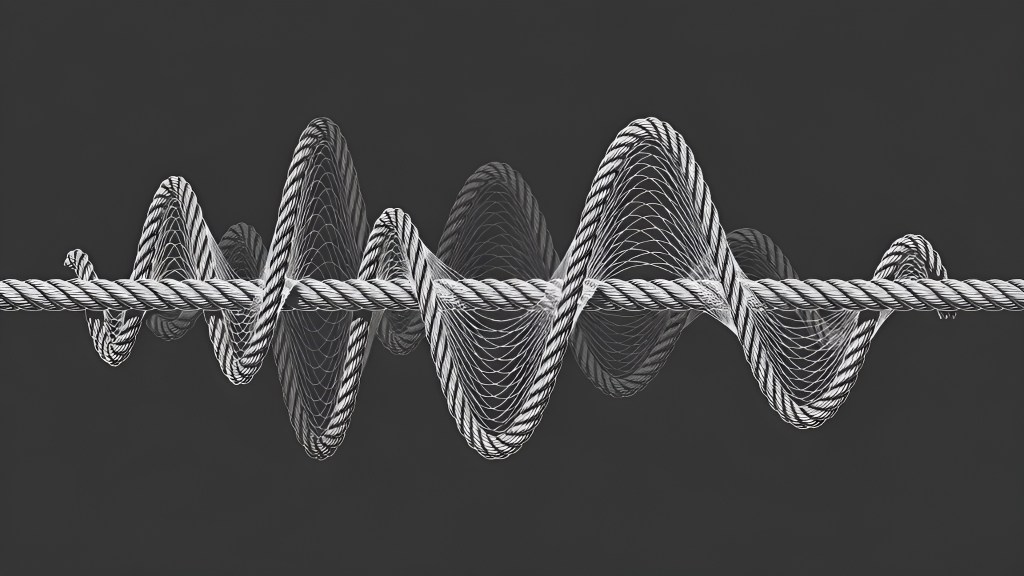

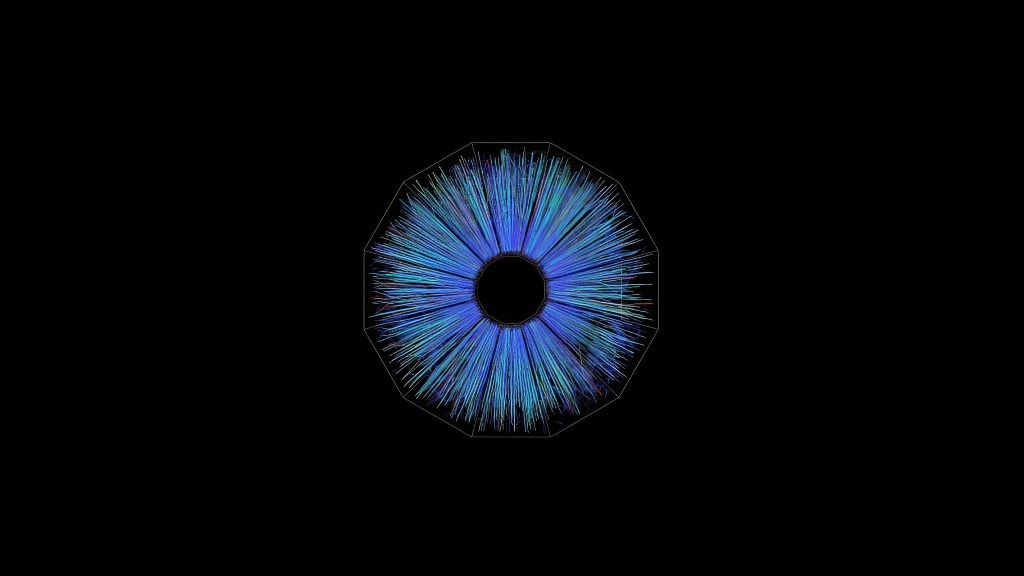
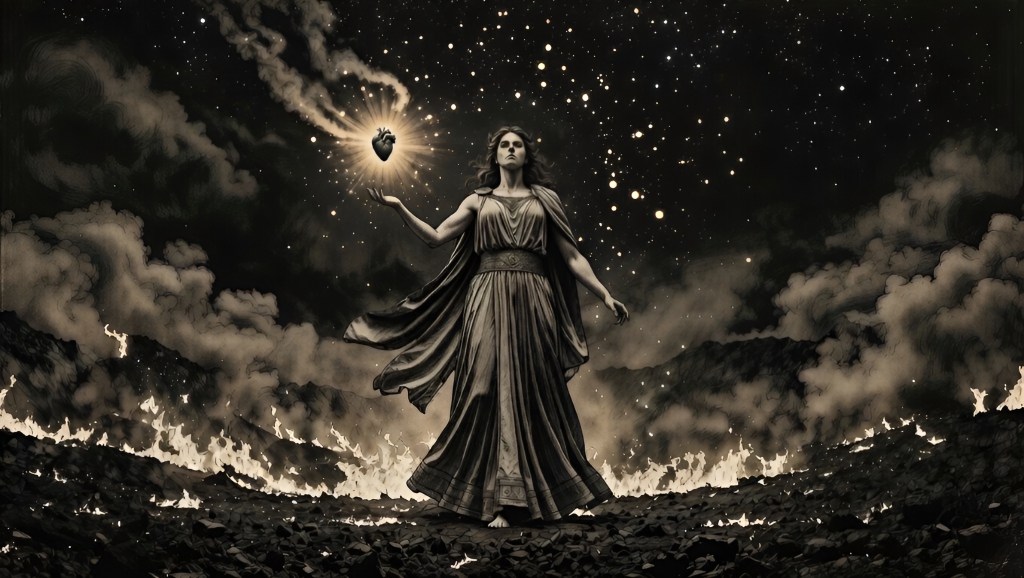
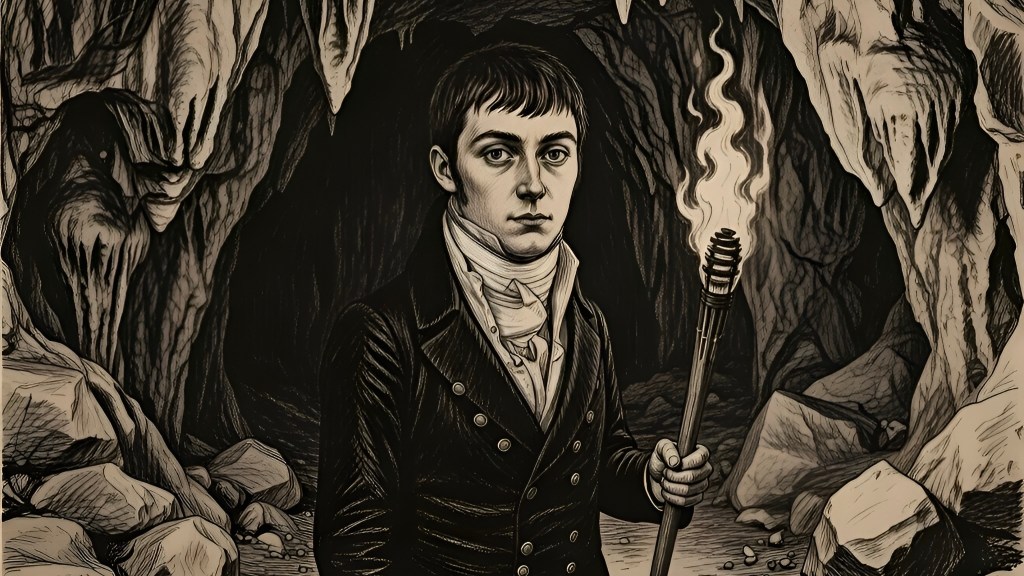
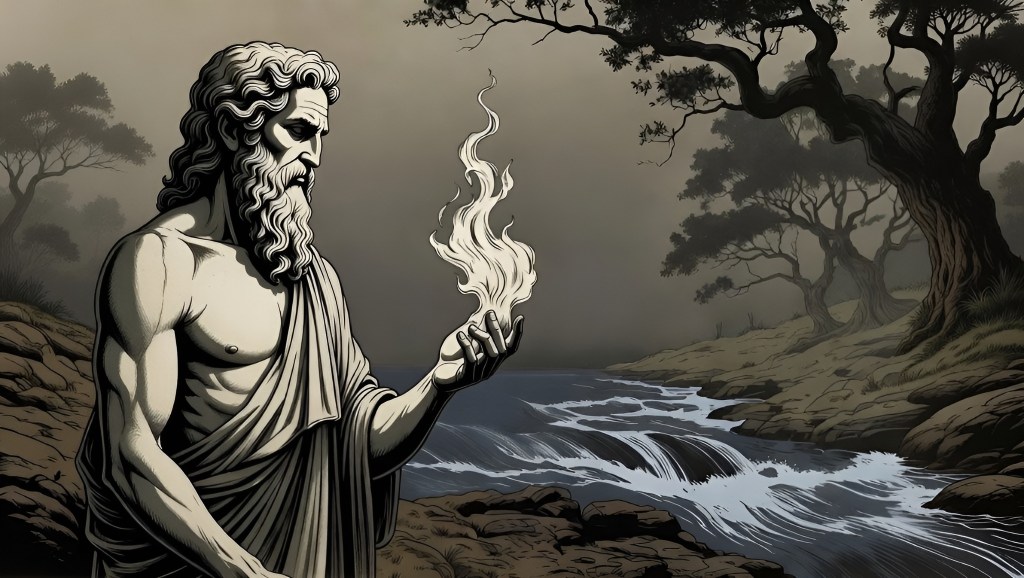
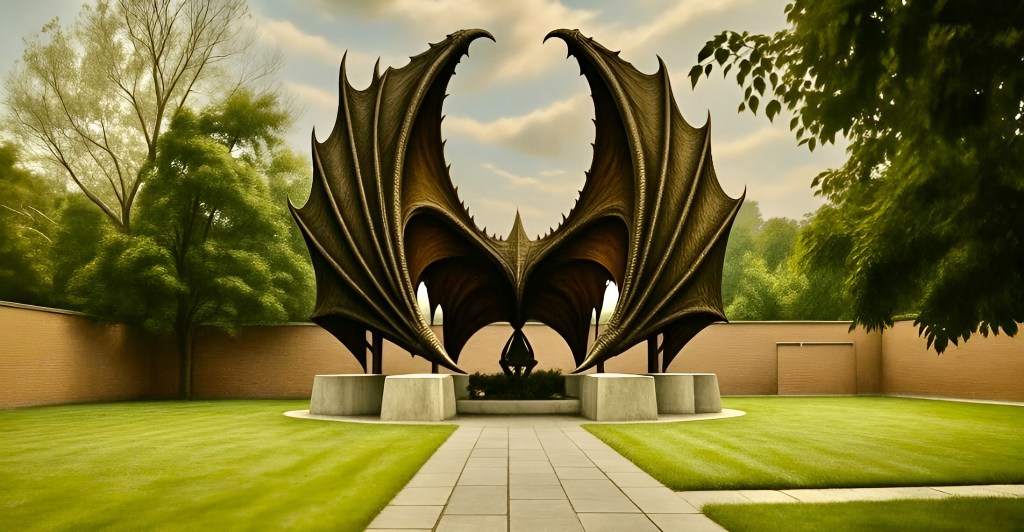

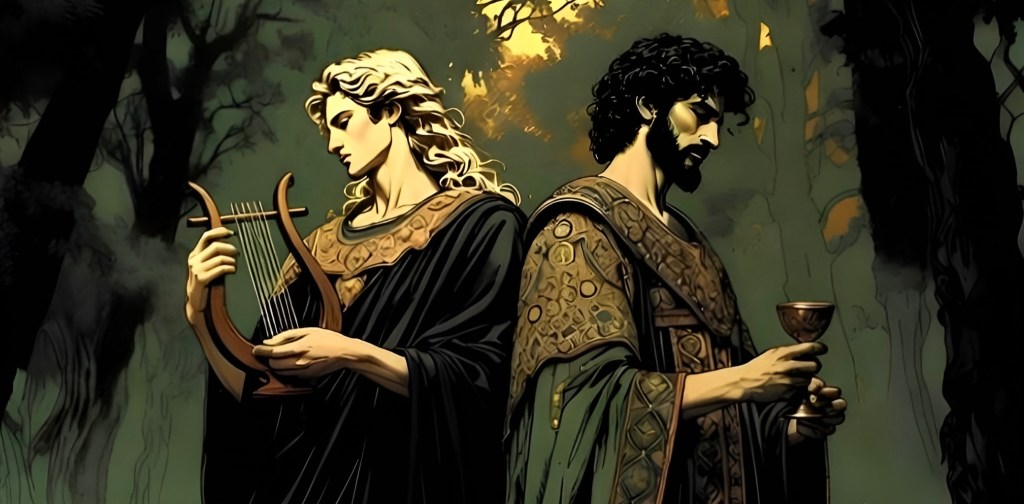

 Rob Robill