“The king was going to open the gate in order to offer the girl to whatever feared thing lives in the jungle. He was sending out a bride to Kong.” — Delos W. Lovelace, King Kong
Legend has it the positive geographical correlation between reports of missing people and Bigfoot sightings is not coincidence — it’s causal.
When the authorities realized the lore was actually true — that Atalan remnants were dragging off hundreds of random nature lovers, including some VIPs — they struck a deal. The giants agreed to leave humans alone if, every once in a while, they were bestowed a virgin. (A military incursion against them was deemed “culturally insensitive” and might have blown the cover-up of their existence.)
Management of the sacrifices naturally fell to the Smithsonian, which had been in communication with the beasts for more than 150 years.
“I don’t know for sure if he’s going to eat you … at least not right away,” agent Fafner told Sienna. “We’re just focused on the transfer ritual … it’s actually quite an enriching experience.”
“Oh, shut the fuck up,” agent Booker said as she rhythmically struck the trunk of a bald cypress with a heavy stick. The knocks echoed deep into the swamp. “She doesn’t need to know that shit.”
“Fine, whatever.” Fafner sounded a little hurt. “Just don’t knock too fast — that’s a territorial challenge.”
“You’re both crazy!” Sienna shouted. Supine on the spongy soil amid ferns, she jerked the ropes binding her arms and legs to cypress knees. “Let me go! You can’t just make me into an offering — I have rights!”
“It’s your punishment for desecrating Native gravesites,” Fafner said, holding a clutch of burning cedar sticks soaked in pine tar. He started dancing around the girl, whooping softly.
As if in response, a crane called out from somewhere within this dusky bayou reeking at Indiana’s big toe. Suddenly anything seemed possible to Sienna, surrounded by a primeval, otherworldly riot of life. Her tears turned the feathery leaves hanging over her into breathing green splotches.
Something nearby knocked back.
Fafner stood still. “Holy shit. That sounded like a response.”
“Keep your eye out for that smelly son-of-a-bitch,” Booker said. “Two agents almost got mauled in Jackson Hole last summer … dumbasses let their guard down.” She gave three more slow knocks, and then, along with her partner, crept to the van parked at the end of a gravel road.
With incredible speed, an eight-foot-tall brute with fangs and long matted hair crashed through the undergrowth — he went straight for the discovery van. The agents managed to climb inside and shut the door before the Hovey Lake Swamp Ape began battering the already beat-up vehicle, leaving deep claw marks through the triceratops graphic.
“No, not us — why isn’t he going for the girl?!” Fafner yelled.
“Don’t ask me.” Booker fumbled the keys into the ignition. “Maybe the motherfucker’s gay.” The van’s engine roared to life, and the back tires pelted the Sasquatch with rocks as it sped away.
The creature bellowed. Then it turned toward Sienna, now madly trying to free herself. As it neared, she retched from its stench and felt woozy.
Then she heard “crunch … crunch … crunch … ” approaching on the gravel road. Through her mental haze, she saw a giant skeleton appear in the clearing with a jewel-encrusted sword.
The Bigfoot stared dumbfounded as the skeleton knelt down and bowed its head deeply to Sienna. “Oh, wise Bee Mother Fo Ishki,” it said with a dry, eerie hiss. “I are glad you found me in time … no, wait …. I found you … ”
In just three strides the Swamp Ape reached the skeleton, and in one swipe took off its head. The bones collapsed to the ground and something that looked like a butterfly spiraled up from the pile, cussing. The girl passed out.
***
“Keep in mind, we’re basically looking for waves in the landscape,” Sam noted. “Technically, they’re called old point bars — accumulations of sand and gravel left behind as the Ohio meandered.”
“Oh, no,” Windi said as they trudged through the mud. “Here we go.”
Thalia groaned.
“You see,” Sam continued pedantically, “since currents flow more slowly on the inside of a river’s bend than the outside, sediment accumulates along a low, curved ridge. After the river changes course, this could provide a space that’s both enclosed by earth and above the water table.”
“Are you sure you didn’t just read the crop circle wrong?” Di asked. “I imagined her in a cave.”
“Any caverns around here would be flooded — the bedrock isn’t limestone anyway. But I guarantee you that we’re standing within a quarter mile of her. Just make sure you check any elevated areas for signs of disturbance or large holes.
The smell of wet earth and decaying vegetation was strong as they spread out and picked their way over the firmest patches of ground. Phiale was struck by a sense the landscape was losing its form. The death of earth is water, she thought.
After wandering around for almost two hours shouting for Tinker Bell and poking around bumps in the floodplain, they sat on a fallen trunk. Phiale wiped her muddy hands on the soft, stringy bark as sweat stung her eyes. The sunlight, once green and golden through the canopy, had grown murky. She slapped a mosquito on her neck.
“We’re wasting our time out here,” Di said.
Sam tapped a topological map marked up with sacred geometry. “No, we entrained with her at this hexagonal node, right here in the Opilwalacha Cypress Slough.”
Di twisted the string of her bow to increase the tension. “We still don’t want to be in the swamp after dark.”
“I’m with her,” Thalia said. She nudged Windi with her elbow. “Hey, give me a smoke.” The girls fumbled handing over the slightly crumpled pack of Marlboros, which fell into a black, tannin-stained puddle, soaking all the cigarettes.
“What a total crock!” Windi shouted and kicked the log.
“Crawk!” something called back from the trees. A white egret floated down to a clump of cypress roots about 20 yards away. It pecked at the ground. Then it displayed its five-foot wingspan. “Crawk! crawk!”
Where have I seen that bird before? Phiale thought and walked toward it. The egret flew up into a nearby cottonwood, where it watched the girl intently.
Phiale noticed the roots were part of a long, narrow rise. A large snake track waved across deep indentions in the surrounding mud.
Now Sam was walking beside her. “Let’s check around the roots first. They can open up large pockets in the soil.”
Phiale shined her phone into the largest opening, revealing a long chamber running along the ridge. Was that a glint of metal? From somewhere deep inside, she heard a faint “Hello? Eh … get me the hell out of here.”
After they dug out Tinker Bell — still sprightly, albeit dirty — and released her from the birdcage, she immediately flitted to a patch of swamp roses, where she gorged herself. Phiale had never felt so relieved.
The fairy then picked up a twig and jabbed it in the air. Not even a puff of smoke. “Get me back to New Harmony.” She laughed and flew in wide circles between the trees, saying, “I’m free … I’m free-e-e-”
A large skeletal hand reached out from the gloom and grabbed her.
“Ohhh … I caught something pretty … I will make it sing to me,” the giant said and lumbered off with the Tinker Bell.
They chased it along its path of destruction, slipping in the muck most of the way. Shortly after glimpsing Hovey Lake through the bottomland hardwoods, they entered the clearing where the transfer ritual had taken place — just as the Swamp Ape decapitated the skeleton.
The creature immediately faced the new arrivals and pierced the air with a screech. Phiale was glad to see the fairy dart up out of the bone pile but couldn’t move from fear. Di brushed past her, nocking a silver-tipped shaft.
The huntress sent her arrow into the beast’s heart. It died suddenly and painlessly.
Chapter 15 drops Sept. 30. Read Part 1 on Kindle or in paperback. (Catch up with the Prologue.)
– Hart [County], mounds near Green river &c. mummies in caves – Indiana, towns and mounds on the Wabash … — Catalogue of “Sites of Ancient Towns and Monuments of Kentucky, &c.” by C.S. Rafinesque
“There’s the sigil — keep singing!” Sam shouted, madly pounding the tuning fork. “Sienna, that’s a D4. We need a C4. You’re interfering with the waveform!”
“Why the hell did you bring her?” the fairy asked, her holographic image flickering in the misty air of Rafinesque Hall.
Phiale was relieved to see Tinker Bell still had her sense of humor, if that’s what it was, as the girl held her own middle C steady — “oooooh … ” But Phiale couldn’t quite match Thalia’s clear, foundational tone.
The note reverberated through the limestone chamber, sustaining a double-helix standing wave that stretched from Mammoth Cave toward wherever Gabriel was holding Tinker Bell. It was definitely outside New Harmony; the fairy had lost her magic.
Sam took advantage of the Green River’s negative ions coursing overhead and the Styx flowing beneath them. Ancient mounds along both the Green and Wabash acted as nodal amplifiers, phase-locking the region’s telluric waves with the combined singing, bounded by the minds of Tinker Bell and her two ancient guardians.
The sound vibrations in the cavern cracked loose a three-foot stalactite, which plummeted 40 feet, missing Sienna by inches and kicking up a thick cloud of dusty guano from a colony of Corynorhinus rafinesquii — Rafinesque’s big-eared bats. She scratched her nose, eyes widening in panic.
She’s going to sneeze, Phiale thought. I knew she was going to screw this up. I just didn’t know how.
A glowing hexagon appeared behind Tinker Bell’s translucent form, followed by twelve spokes, nested triangles and a rosette of six yellow petals. The pattern pulsed in time with Windi’s egg costume, and Phiale’s mind flashed on Persephone gathering daffodils just before the ground opened — herscream fading as she descended —
Sienna’s whole body was twitching now. Sam raised his camera to get a photo of the sigil.
Then came the girl’s loud, nasal, goose-like honks.
The standing wave shattered.
***
Driving back up I-165, Sam suddenly remembered something from 1818 (drinking from Mnemosyne can have that effect).
Caught Audubon going through my knapsack, the varmint … need to cache the Walam Olum glyphs … just auger out a compartment on the underside of his new millstone … seal it back up with lime putty … ”
A depository of the countryside’s standing wave patterns, the glyphs even happened to be on the way home, still hidden in the stone, on public display at Audubon Mill Park.
***
Two days later, Sam was bent over the vibrating membrane of a 1964 Hans Jenny tonoscope, painstakingly tracing a template from one of the glyphs.
Di tapped the red cedar tablet with strange carvings and precisely painted geometrical forms, darkened with age and cracked. “Lucky I knew someone with the Henderson Police,” she said.
“Yes, I admit the chiseling was a bit suspicious,” Sam said distractedly. “But all that’s over now. They let us go, and we found what we needed.”
Sam had reserved the entire Working Men’s Institute attic that afternoon for “cymatics research.” Phiale was sitting with Windi, Sienna and Di at the Owen Round Table under the slanted ceiling with its exposed planks, taking in the room’s curiosities: crystals in glass cases, a locked safe labeled “bone fragments (giants),” Leyden jars and galvanic batteries.
The tonoscope was an interconnected contraption consisting of a speaking tube and boxes arrayed with dials and switches connected to a black rubber membrane the size of a snare drum, stretched over a metal frame.
Once Sam had traced the central rosette onto the drum, along with whatever else he could remember of the pattern that had appeared behind Tinker Bell, he covered it with a thin layer of fine sand and had Thalia sing a C4 into the tube while he drove the frame at various frequencies.
It made a lot of pretty shapes, but of little value for locating the fairy. “These harmonics just can’t pull enough resonance from the countryside,” Sam said, slumping into a chair, burying his face in his hands.
“Imagine my shock — one of your harebrained plans didn’t go right,” Di said, flipping through a copy of the Evansville Courier & Press she’d picked up on the way in through the library. (She had an unhealthy fixation with the game warden’s deer poaching violations in the Outdoor Report.)
“Wait!” Phiale said, slapping her palm down on the Farm section. A standalone photo titled “An Ear-ie Sight” showed a crop circle in a cornfield just west of Mount Vernon — taken the day of their cave rite. Its pattern featured a hexagon just inside the main circumference, surrounding a rosette with six petals, interlocking triangles — the whole deal.
“That’s it!” Sam shouted. “The full pattern was too big and bold for some Chladni plate or dank cave. We bounced that critter off the ionosphere.”
***
Leaving the Working Men’s Institute, Sam tucked the newspaper under his arm and they cut through Church Park toward Galata Antiquities to break out the protractor and old maps. The sun was shining, and Phiale felt good about their progress. Sienna meandered behind, humming as they walked past a thick row of trees … birds chirped … including a series of clear, sharp whistles.
“Ah, the alarm call of an eastern phoebe,” Sam said, “first banded by Audubon in 1804 to see if they would return to their nests the following spring. It’s also named after Artemis’ grandmother, calling out to her in more relaxed moods … fee-bee, fee-bee.”
“God, you never quit talking,” Windi said, taking a drag off a cigarette.
“That says a lot coming from you,” Di chimed in.
Phiale looked back to see if she could spot the phoebe. She couldn’t see it — or Sienna for that matter. They briefly scanned the park for her but figured she’d headed somewhere on her own. So they started off again.
After only a few steps, Phiale stopped so abruptly that Windi ran into the back of her. “What the hell?” the latter exclaimed.
“Yeah, good question,” Phiale said, watching the Smithsonian van lumber along Church Street, severely dented, its windows blackened and front bumper sticking out like a tusk. It looks like a wounded mastodon, Phiale thought. Out for blood.
“Our normal waking consciousness, rational consciousness as we call it, is but one special type of consciousness, whilst all about it, parted from it by the filmiest of screens, there lie potential forms of consciousness entirely different.” — William James
The man who smelled like kerosene was back to talk with the snake that turns into a dragon. From where Bridget was tied to a stalagmite facing the cave wall, she could only hear snippets of what they were talking about — it concerned some sort of rite — there was a lot of German and hissing. She tried but couldn’t quite remember his face. She was sure she’d seen him, but she’d been so woozy. Just blackened knuckles and the soot streaks up his hairy forearms. Her last clear memories were of standing on the riverbank, seething at how those academy girls thought they were so much better than her and how she was secretly glad the geese had bitten them because of how mean and greedy they were. Then something had clamped over her whole body — black, ridged bands. It was hard to breathe. The rhythmic beat of wings. The landscape below a blur. Her geese, terrified … scattered …
***
Cynthia’s wild locks flowed over the back of her tunic, and a silver half-moon necklace pendant flashed in the sunshine. Just before she released the bowstring, a gasoline-soaked rag flared at the end of the arrow. The shaft arced high across the municipal pleasure garden and descended toward the faint circular impressions of the old Harmonist labyrinth, where the newly installed Flame of Heraclitus hissed and spat acetylene.
A sudden gust of wind blew the arrow into the History Club’s reconstruction of the Philanthropist for the centennial of its arrival. The boat’s wooden frame, muslin skin and papier-mâché details were quickly engulfed.
“It was the Fates, y’all.” Cynthia dropped her head in shame. “They had Aeolus send forth a breeze, I’m sure of it.”
“Yeah, you never miss,” Doris said. She felt rattled, like the universe wasn’t working right.
“Other than when she accidentally killed Orion because she didn’t recognize him,” said Rosabell, whose idea it had been to stage a lighting spectacle, based on an ancient standing moon mound ritual. “But that doesn’t really count as missing.”
“Do you always have to bring that up?” Cynthia’s silver eyes hardened.
Nobody was injured, so Club Showcase Day continued once the smoke cleared and someone lit the flame up close. Wearing cream-colored corduroy trousers covered with classmates’ signatures and a few hand-drawn owls, the senior class valedictorian offered words on flux and venturing out into the real world — to officially dedicate the flame — the future centerpiece of the hedge labyrinth, which would take more than a decade to complete. A Model T puttered in the distance.
After the speech, Doris, Cynthia and Viv wandered over to the Butterfly Club display under a mulberry where Clara was informing a group of students and families about the Bombyx mori moth. Doris was mesmerized by two fuzzy antennae attached to Clara’s cloche hat bobbing around as she explained: “The species name comes from morus, which means ‘mulberry’ in Latin.” She pointed to the branches overhead. “Their sole diet consists of its leaves.” To demonstrate, the club had set up a live display of caterpillars munching away in glass jars. “In his American Manual of the Mulberry Trees, Rafinesque suggested cultivating those that grow smaller, less palatable fruits — its leaves make the worms produce stronger silk.”
Leaning against the mulberry was Otto Rapp, Butterfly Club adviser and New Harmony’s lamplighter, with a long, graying Lincoln beard and coveralls smeared with lampblack. The display also featured his famous moth collection in 30 glass-topped boxes.
Since there were plenty of members to staff the booth, Clara joined them for a visit to the occultists: three vamps in black evening dresses and beaded necklaces sitting behind a Ouija board.
“Put your fingers on the planchette and ask it a question,” Velma said.
“Where’s the buried treasure?” Viv immediately asked.
“Can’t you think of anything different?” Velma snapped. “You never get a straight answer anyway.”
“Clear your minds and picture a glittering pot of gold,” Viv told Doris and Clara. The planchette jerked up and to the left.
“Zowie!” Doris blurted. She looked at Rosabell, but the fairy just shook her head and shrugged.
“Everybody calm down,” Viv said. “C … A … somebody write this down!”
It spelled out: “C A P T M C C O Y” and then stopped.
Velma drew in a sharp breath.
***
The next evening as they walked up Main Street, Doris felt a dread like going to someone’s funeral … but with the added stress of actually having to talk to them.
“So you mean a seance can tune in spirits like they were the WGBF farm report?” Clara asked.
“Basically,” Rosabell said. “Our minds are like crystal radios. The ever-living fire is already broadcasting everywhere. Your body is just the antenna, and attention is the tuning coil. Most days we stay locked on the everyday station … the foxtrot or whatever, but sometimes the dial slips. Especially here. A strong life that ends in something violent — like a boat explosion — leaves a waveform that never quite decoheres. It keeps traveling through the ether until a resonant chamber picks it up.”
“Wow, I haven’t the faintest,” Clara said.
“Is it like the Phiale inside my mind?” Doris asked Rosabell under her breath.
The fairy grinned. “Yeah, she needed a head to rattle around in, and yours had a lot of extra space.”
“That’s not a nice thing to say,” Doris shot back. The air was tinged with the scent of river mud, and moviegoers were queued up for the Saturday showing of The Hunchback of Notre Dame. A Studebaker had angled in front of the pharmacy next to two horses tied to a hitching post. Everything feels old and new at the same time, thought Doris as she watched Rapp walking in the distance with a long pole and stepladder slung over his back. Guess he’ll be out of a job soon. Doris pictured the electric lights that bathed Evansville in a magical glow.
When they reached the McCoy mansion, they stopped at the black, spiked wrought iron gate to gawk up at the three-story Victorian. Doris felt a chill.
The widow Margaret McCoy, a friend of the Occult Club, answered the door. “Hi, Velma, I hope you told everyone how salty the captain can be.” Her silver hair pulled back in a bun, she led them into the parlor, the hem of her black dress sweeping across a Persian rug. The room smelled of lavender, furniture polish and candles, which were blazing by the dozens. Velvet drapes blocked out the dying light, and flames flickered in wall sconces.
“I do hope the captain behaves himself,” Margaret said as they sat around a heavy oak table. “He likes getting re-membered, but sometimes I think that’s only so he can complain.”
After they touched hands in an unbroken circle, Margaret recited the Lord’s Prayer and some spiritualist hokum, concluding with: “Dearest William, Master Skipper of the Midwest, show us some sign you haven’t yet crossed to the other shore.”
A mantel clock ticked … nothing … Clara snickered; Velma shushed her.
Then Doris thought she heard a distant bird’s raspy “crawk … crawk … ” Her heart was already racing when a riverboat steering wheel mounted above the clock, glowing red in the light of the fireplace, creaked loudly and started spinning.
Then the image of a white river bird — some sort of egret, Doris thought — materialized a few feet in front of the wheel, hovering in the air. The bird raised its wings into a “V,” its graceful feathers dissolving into the long white beard of a man whose eyes sparkled like the Wabash at sunset.
He gazed down at their awestruck faces and drew a deep breath to begin his transmission from the netherworld …
“Who the FUCK are these bitches, Maggie?! My balls get blown off in a boiler blast and now it’s some horseshit knitting circle? It smells like a fucking funeral home in here.”
“Now, now, darling!” Margaret said. “These young ladies just want to ask about the river treasure.”
The table lurched. “Jesus Christ on a paddlewheel! I was facedown in the mud for 25 years! Why don’t you ask the goddamn catfish that swam off with my PECKER!”
Viv and Cynthia couldn’t help but laugh. Doris, though, was trembling and as pale as the captain.
“Think back to before you were killed, dear. You remember that young Italian man. What was his name … it started with a “G.”
“Please, Fates … spare me this one time,” Cynthia muttered.
“Giovanni from Pearl City! Haw haw! Said some Kraut literally hugged a fucking horse right next to him in a plaza back in the old country when he was a boy. Then the dumb Heinie — had a huge mustache — started ranting how a mountain fairy told him about the myth of the real Rheingold — but in Indiana! Raving mad, both of them.”
A distant boat whistle sounded from the depths, and the captain dissipated under the wavebands. Cynthia groaned and thunked her forehead on the table. “Of all people, it’s that Italian creep.”
As they were gathered in the foyer to leave, Viv proclaimed their next step was locating Pearl City.
“I know where it is,” said a young man sitting on the stairs peeking through the banister rails.
“Never mind him,” Margaret said, laughing nervously. “That’s our grandson. He’s a bit of an odd duck … likes to tease people … but he’s not as funny as he thinks he is.”
“I’ll take you there if you stop by tomorrow.”
“Back off, crackpot,” Cynthia said, shoving the girls out the door.
Viv struggled against her. “Wait, we should go with him. You can’t stop us.”
Standing on the large front porch, Clara lit a cigarette and squinted from the smoke. “Looks like we’re going on a field trip.”
***
The man was back. This time their voices carried more clearly through the cave. Underwater treasure … people trying to steal it … a group of students … Goldbug Girls. Bridget pressed her cheek against the cold stalagmite and wondered if she was losing her mind.
Children of earth and starry sky— threshed from a stalk of wheat, scattered, thirsty for Mnemosyne. —Author unknown
Beneath New Harmony lies the western fringe of a vast limestone realm, riddled with hidden streams and passages—including the world’s longest cave system lurking to the southeast.
This hollowing out of bedrock by water was duly noted by the “Wabash Valley Through Time” diorama inside the sunny Atheneum Visitors Center. Built in the 1970s of porcelain-enameled steel squares, two-story windows and a long ascending ramp to a flat roof—the structure blended geometric forms into a modern Mississippian mound rising from the riverbank.
“Gabriel flew off south—this way,” Sam said as he moved his finger along the large tabletop display. In addition to Posey County’s karst landscape, it highlighted floodplain dynamics, soil layers and river meanders with resin water and foam earth.
“You start getting into cypress swamps 15 miles downriver,” Di said. Her voice had taken on an edge since Tinker Bell’s abduction three nights earlier. “I’m getting a strong feeling from those trees about something. That’s where I should be now. We’re not going to learn anything from this.”
Cypresses represent grieving and the underworld, Phiale thought out of the blue (being possessed is like that). Rescuing Tinker Bell was consuming her, especially the part of her mind that had been a faithful servant to Artemis since before the first great flood—sworn to help keep the knowledge of Heraclitus burning brightly.
“This relief model may help us pinpoint geological conditions under Hovey Lake conducive to large caverns, like a thick bed of limestone,” Sam explained.
Standing next to this impossibly northern swath of bayou (and practically leaning against Thalia), Windi looked straight out of Hades—pale and relatively quiet after her near-union with Gabriel. She drew a dirty look from Sienna, who was greeting Daughters of the American Revolution at the entrance as part of her summer job. Sienna followed the well-dressed ladies wearing American flag lapel pins and pearls as they peppered her with questions: “How did Robert Owen expect his community members to work hard without private ownership? Form bonds without religion? Thrive under neglected leadership?”
“Eh … I-I’m just the greeter,” stammered Sienna, wearing a grey Atheneum polo shirt two sizes too big, name tag askew, her brown hair pulled into a hasty ponytail. “The guide hasn’t shown up yet.”
“Good morning, mesdames, enchanté,” Sam said, bowing deeply. “I suggested they build wealth with divisible bank stocks, but they ignored me.”
“Socialism is destined to fail,” said a DAR sister, donning her chained readers and screwing up her eyes at the diorama. “Is this a child’s project? Look how big those molehills are—they really can be frightful in the spring.”
“Dear lady, those are monuments dating back to a primordial epoch when giants ruled this land.”
Sienna groaned and shot a glance outside.
“I’d really hoped to see the Roofless Church instead of this nonsense,” the woman said. “They had it roped off because of some kind of gas line explosion.”
“Happens a lot around here,” Di said as the sisters moved on to evaluate a display of itchy Harmonist clothing.
Sienna lingered. “You all know about the giants?”
“Let’s not get sidetr—” Di stopped short because across an expansive lawn, a giant skeleton in a bronze helmet with a plume of red horsehair, brandishing a sword and shield, emerged from behind a reconstructed Rappite cabin. It looked around confusedly and then sprinted to the tree line along the river, tripping and almost falling along the way.
“They didn’t come back right,” Sienna said, crying. “It was my f-f-fault. Mr. Owen kicked me out of the Seance Club … that’s OK … I’d rather do 4-H anyway.”
“It’s for the best,” Thalia said, putting a hand on her shoulder. “Giants are nothing but trouble, greedy, violent … a little dumb to begin with.”
“Tell us what happened,” Di said.
“Well, I guess I should go ahead and say, before somebody gets hurt. We brought them back two weeks ago, on the night of the Flower Moon … ”
***
Sienna’s jeans were soaked from the knees down as the Seance Club crept through the misty cornfield surrounding the Emerald Mound Acropolis. A din of crickets and peepers pulsed in the clammy night.
Mr. Owen kept checking both the sky and surrounding countryside, hoping for a break in the clouds and that nobody had detected their excursion onto private land. The distant glow of St. Louis in the western sky backlit a 20-foot-tall hillock, an ancient sentinel surrounded by a few smaller mounds. Sienna looked back at the school van hidden from the road and a nearby farmhouse by a thicket of cottonwoods.
Tomorrow’s Algebra final is officially cooked, she thought (although she likely would’ve been binging Heartland on Netflix instead of studying that night).
Once they reached the tree-covered Emerald Mound, Mr. Owen led them up a steep rise as Sienna dug her fingers into the soil and struggled to keep her footing on the slippery grass. Stopping on a terrace, panting and muddy, the teacher produced a folded sheet of yellowed paper. The words “Ancient Lunar Temple” danced under his shaky flashlight beam. “Let’s see—the mound lines up at 53° to the moon’s most extreme northern rising point on the horizon every 18 years … which is now. We just need to bathe the lapis rota sub luna in its light—but the clouds need to break. We’re on the right side, facing east. We just have to unearth the chamber cap.”
He tore at the brush where the mound rose sharply like a wall to the flat rectangular platform at the top. “Help me dig.”
Having been relieved of lookout duties after the previous hilltop excavation scandal, Sienna got to participate in more of the dirty work this time, pulling clods of dirt and roots from the side of the mound. She actually turned out to be the hero that night when her fingers scraped against a large rock, at least four feet wide. “I might have found it,” she said.
“Good job, Sienna.” (It wasn’t a phrase Mr. Owen had reason to utter before.)
“Bellatrix, give me a crowbar,” he said. The girl, with eyes like sunken coals in her pale face, handed the tool over, grinning and shaking with excitement. Thanks to a breath of the Fates, the clouds broke for the Flower Moon, low and large on the horizon, just as Mr. Owen worked loose the limestone slab. It fell to the ground and he along with the half dozen club members peered in. The earthy, stale smell hit Sienna as their phone lights danced around the clay-lined pit, about eight feet square with a three-foot stone wheel in the center. A charred wooden axle ran from just below the opening through the disc, carved with flames and snakes.
“Turn your lights off,” Mr. Owen said. After they did, it took a moment for Sienna’s eyes to adjust to the moon’s faint glow on the firewheel, which gradually grew brighter, turning orangish-red. Then it creaked, now spinning fast enough to kick up a plume of dust. Flames flickered along its rim.
Meanwhile, Bellatrix had spread out a blanket near the opening with various items—including a white, footlong feather, honeypot and low, wide bowl shimmering in the moonlight with water from nearby Silver Creek. The Seance Club gathered in a semicircle around the blanket. “Let’s not screw this up, girls, we don’t want them coming back wrong,” Mr. Owen said.
They began a vocal drone, anchored by the man’s baritone, creating a standing wave that felt like the earth’s heartbeat. Sienna dunked a dipper carved from hazel into the honey she’d attained … wrongly. Mr. Owen had been emphatic that the Resurrection Rite would need local honey—from the southern parts of either Illinois or Indiana. She had bought it from a thrift store, and it was labeled “local honey.” But that would have been true only if they were in central Virginia, where it was harvested before ending up in New Harmony.
See, honey absorbs biophotonic memory light from plants. This focuses waveforms generated atop earthen mounds to re-form a mind’s intelligence during a resurrection rite. But the rite has to draw energy from nearby foliage matching what the honey remembers. (At least that’s what Mr. Owen inferred from ancient Greek rites.)
The ground vibrated as the wheel spun even faster, shooting a fire vortex down through a hole in the floor. Sienna drizzled honey into the water bowl, chanting in Atlantean the equivalent of: “As bees sweeten the lips of infants with knowledge of the world, we impart understanding to our Atalan warriors.”
Mr. Owen shouted into a cellphone to an Adept in the granary: “It’s happening. The ley line is sparking now.” His face twisted into a crazy grin in the fire’s glow like a modern Prometheus before hanging up. “One of their fingers is twitching!”
Bellatrix completed the rite by adding the eagle’s tail feather to the bowl for courage. Then the teacher warned, “Keep an eye out for other effects. We just energized several nodes including the main one in Cahokia.”
“Like the procession?” yelled the lookout from atop the mound. Sienna clambered to the apex along with the rest of the group. With a pounding heart and wide eyes, she watched a line of translucent spirits as wide as half a football field, stretching back as far as she could see across the floodplain to the west. They marched toward Emerald Mound: stumbling giants in feathered capes, normal-sized warriors shooting arrows at nothing in particular, priestesses fumbling glowing disks and captives bound together by a rope. What are they for? Sienna thought. Then, just as the horrifying answer began to form, someone shouted: “Hey! What the hell’s going on up there?!”
“It’s the farmer,” Mr. Owen hissed.
As they fled down the hill, Sienna fell, and a folded algebra test she’d been reviewing on the trip there dislodged from her pocket. Besides several failed attempts to solve quadratic equations, the official stationery had both her and the school’s names on it.
***
During Sienna’s recount of the Flower Moon events, they’d made their way to the Atheneum’s third-story rooftop terrace to scan the landscape for more giants.
“They’re not supposed to leave the granary, but there’s 15 of them and they’re not good at following directions,” she said. “They’re better after we sing to them, though.”
“You literally sing to them?” Windi said. “And I thought the Butterfly Club was deranged.”
“More like humming. Mr. Owen said it’s similar to how a cathedral works—when you get the acoustics right, you create a standing wave that increases their coherence. Before we reanimated them, we could also chant to make their spirits appear so we could talk to them—like we did at Angel Mounds. The granary works, but Mr. Owen said there’s some chambers big enough to do it better in Mammoth Cave—what’s that room called … they have concerts in there … oh, it’s that weird guy … ”
“Rafinesque’s Hall,” Sam said. “I’m familiar with the ritual—remote communication with the living or dead.”
“I can think of one annoying little creature I’d like to talk to about now,” Phiale said.
Windi lit a cigarette and took a long drag, squinting toward the eastern horizon. “Looks like we’re going on another field trip.”
***
Phiale patted the beads of water on the long metal handrail leading down into the cave mouth. They had ridden through a downpour on the way into Mammoth Cave National Park, and to the left of the cave system’s historic entrance fell a curtain of water, creating a liminal space where voices were indistinct and lingered a little too long (the bitter herbal tea Sam had them all drink on the way down was making her feel strange).
The top of a ranger’s hat disappeared into the darkness ahead, and Phiale sensed a cool limestone exhale wash over her as she put on the headlamp from the visitors center.
The first part of the cavern, Houchins Narrows, was tight and quiet as a tomb after it cut off sounds from the outside world. Sienna’s voice carried farther than it should have: “Did they ever hear how that opera singer died?”
Thalia: “Yeah, heart attack, I’m cleared. Speaking of, I hope we don’t see any dwarves down here.”
Windi: “Why’d we have to bring Sienna along? She’s bad luck.”
Sam: “Shh! We can all hear you in here.”
Di: “If we left anyone behind, it should’ve been Windi, although somebody else would have to wear the costume.”
Windi: “I’m not going to wear that costume.”
Phiale: “She’s cranky because we couldn’t eat meat for the past three days.”
Sam: “Shed Titanic flesh, reveal the Dionysian spark.”
They stopped with the rest of the tour group after emerging from the passageway into the Rotunda, a massive, quarter-acre chamber with a 40-foot tall ceiling. Bats fluttered overhead.
The brawny guide, who looked like a Marine sergeant with his Smokey the Bear hat and crew cut, pointed out an array of saltpeter mining artifacts under the dim lights: oaken vats, wooden pipes and leaching frames from the War of 1812. Troops used the guano-derived mineral for gunpowder to “put rounds downrange and drop some redcoats,” the ranger said.
“Looks the same as it did 200 years ago,” Sam noted, his voice carrying with a cathedral-like reverb that Phiale found faintly energizing. “You’d think they could’ve cleaned this place up better by now.”
“What was that?” the guide said sharply.
“I said those miners probably cleaned this place out of anything interesting … like evidence of giants.”
“What about giants?” said a boy of around 10 accompanied by his grandmother.
“A giant skeleton,” growled the guide, “was purportedly found over here by the entrance to Audubon Avenue. Eight feet tall, massive jawbone.”
“Typical Atalan bone structure,” Sam told the boy.
“Were there really cave giants?” the boy asked his grandma as she pulled him close.
“Of course not, sweetie. Do be quiet.” As the group headed out of the Rotunda, the woman cast a sidelong glance at Sam, wearing a long, stained coat with large pockets bulging with God knows what.
“There were most certainly giants here, ma’am,” said Sam, chasing after them. “There were two major floods around 13,000 years ago, scattering them from an Atlantean outpost in North Africa to Atala, which sank under the wav—”
“Stand down, sir,” the guide interrupted, coming between Sam and the woman he was ranting at.
“So they retreated underground!” Sam stood on his tiptoes and shouted over the man’s broad shoulders. “To the only cave system big enough to accommodate them.”
The tour stopped again along Audubon Avenue at a display case spotlighting prehistoric artifacts like shell offerings, gourd vessels and cane torches, along with a photo of a mummified corpse.
“Is that real?” the little boy asked, pointing to the picture.
“That’s affirmative,” the guard responded. “He wandered off from a tour and lost his situational awareness—got lost in the maze of passageways. It goes to show that caves aren’t amenable to human life. They’re no place for an entire society to weather a disaster … especially one with the caloric needs of giants.”
Sam winced at the group’s laughter. “What about this?!” He pointed to a patch of fuzz growing on the wooden base of the lit case. Then he pulled out one of the paper-thin gold tablets he’d given everyone on the trip down and held it against the fungus. It glowed bluish-green for a moment, then emitted a golden light. “A variety of foxfire. Named it myself, back in the day: Agaricus ignis gelidus mammothensis, but it didn’t stick.” He frowned and shook his head. “Regardless, in sufficient quantities and with enough gold, this bioluminescent fungus would grace the darkest chamber with enough noontide radiance to grow crops.” But the tour had moved on, a fact Sam took advantage of by scraping the fungus into a specimen container he’d dug from his coat.
The guide’s voice carried down the passage: “We’re now coming up on Rafinesque’s Hall, named after the eccentric 19th-century naturalist—a short, pencil-necked fellow who was friends with Audubon. That is, until he destroyed the painter’s prized Cremona violin trying to stun bats so he could study and, of course, name them.”
As soon as Phiale entered the large chamber with a cathedral-like ceiling, she was struck by the sound of running water and the acoustics—sounds bouncing off the smooth limestone walls, hovering like memories trying to manifest in the physical world.
“Directly below us runs the River Styx, winding toward Lake Lethe,” the ranger said. “Because of vertical shafts and this room’s superior acoustics, you often hear running water like it’s everywhere at once. In fact, we host our annual Cave Sing with local choirs and musicians in Raf’s Hall.”
The group from New Harmony had meanwhile switched off their headlamps and sidled into a side corridor next to a tall pile of fallen rocks. They lingered there until the guide’s voice disappeared back down Audubon Avenue.
“Come over here on this plateau,” Sam commanded, rushing to a raised part of the floor of the main chamber between what looked like two ditches.
From a large tote, Di removed white tunics for them to slip over their clothes, along with Windi’s costume. “I said I’m not wearing that,” the girl muttered.
“Nonsense,” Sam snapped. “Put it on—we don’t have much time until the next tour arrives.”
Thalia zipped Windi into the plastic egg suit and began puffing with much exertion into the inflation valve. “Let me do it,” Di said, pushing her out of the way. Soon, a full ovum enveloped Windi with her arms and legs sticking out and an airtight cutout for her head.
“Now sit around the cosmic egg, and read from your gold lamellae,” Sam said.
“I am a child of Earth and starry sky… ,” Phiale chanted along with the rest. “ … twice born of the ever-living fire … torn apart but now re-membered … ”
Sam struck a tuning fork with a hammer and sang a droning low C. Thalia joined in an octave higher and the others tried to match it. Phiale’s breath made visible sine waves in the cold, damp air. She felt like she was dissolving and re-forming more powerfully.
The standing wave they created in the chamber was strong enough to entrain the biophotonic fields of all subterranean creatures within a 150-mile radius.
Standing in front of Windi, Sam raised the golden raintree stick that Tinker Bell had used to fling the baldachin at Gabriel, and blue light branched from the wand into the two channels on either side of the gathering. Water began flowing through both of them.
Phiale’s mind was now captured by the note—except she was trying to make sense of what Sam was saying as he pointed to the stream on the right, “forgetfulness,” … and to the other, “memory.” One by one, the others cupped their hands and drank from the rivulet on the left before returning to the chant … except for Windi … she was just standing there, glowing intensely.
Phiale suddenly felt incredibly thirsty. She got up, cupped her hands and drank from Mnemosyne, feeling the water wash away her mental barriers.
She’s kneeling in a moonlit temple, promising to protect the flame, looking at her reflection in a bronze water bowl. Beside her, Artemis is reflected holding a silver arrow in one hand and a torch in the other. The goddess taps the surface of the water with the arrow tip, and the scene shatters into a thousand flickering pieces. Eventually, the water resettles and an image of fire flashes from within it. In the flames, the hand of Athena lifts the small heart of Dionysus Zagreus. An oath is sworn by the blaze itself.
There was another flash—this one overhead—energy arced across the cavern’s ceiling and concentrated a few yards in front of the group. What looked like a ball of swirling flames coalesced into the likeness of Tinker Bell in an elaborate bird cage, squinting through the narrowly spaced bars. “Windi? Is that you?” she said. Then the fairy doubled over with laughter. “You look like you’re having another egg-setential crisis! You crack me up!”
Part 1 of The Flame of Heraclitus serial novel is now on Kindle! An irreverent ancient fairy guards Heraclitus’ eternal flame in the ruins of New Harmony’s utopian dream — protected by a no-nonsense Greek goddess and her reluctant water nymph. Chaos ignites as clashing cults awaken long-forgotten horrors.
“Tradition is not the worship of ashes, but the preservation of fire.” — Gustav Mahler
“Plants are called ‘emergent’ when they break the water’s surface,” Mrs. Owen explained to her Elementary Biology class. “Local examples include yellow water buttercups, named Ranunculus flabellaris by professor Rafinesque. They bloom this time of year in Maple Run, bearing yellow flowers that display radial symmetry — Clara! Quit staring out the window and explain to the class what radial symmetry is.”
“Eh … it’s when they broadcast jazz from the graveyard?”
“You either need to clean your ears or —” Mrs. Owen slapped the girl’s desk with a blackboard pointer three times: “Pay! Better! Attention!”
“Lord, I need a coffin nail,” Clara said under her breath as the teacher walked away.
Viv leaned over from the next row and whispered, “Don’t let that Trotsky get to you.” She held up a pack of Marlboros. “For after class. Mild as May.”
Clara’s eyes, already large behind the thick lenses of her round, tortoiseshell glasses, bugged further at the sight.
Viv turned to Doris behind her. “I’ve got enough if you want one too. I’m dying to show y’all something.”
“And how!” I’m actually going to inhale this time, thought Doris, who’d transferred to the school a few months earlier and was eager to make friends.
So they puffed the last class of the day away on a lawn along the east bank of the Wabash while Viv filled them in on the craziest thing Doris had ever heard. Supposedly, the ghost of Rafinesque, via a Ouija board owned by Occult Club Dabbler Velma, informed Viv of a treasure map concealed behind his portrait in the school’s main hallway.
“Why are you hanging around Velma — that vamp’s got freaky raccoon eyes,” Clara said, giving Viv a death stare.
“What difference does it make,” Viv said, pulling an old sheet of rag paper from her beaded purse. “What matters is the map was there. We’re going to get rich — and it’s going to keep that racist bank from taking pa’s repair shop.”
“I heard the town wants to turn it back into an opera house,” Clara said.
“Opera is dead.”
As if to prove her wrong, a voice from beyond a bend in the river floated toward the girls: a tenor singing the “Recondita armonia” (hidden harmony) aria from Puccini’s Tosca. A tall man in his 40s with thick eyebrows, a thin mustache and slicked-back hair came into view propelling a jon boat with a long pole. Dripping freshwater mussel cages were scattered across the deck. “Ciao, my name is Giovanni,” he said to the girls, tipping his boater hat as he drifted past. “It is nice to meet you, belle ragazze.”
“Don’t care … at all,” Viv muttered.
Doris smiled and waved, picturing herself reclining in the punt, gliding downstream as an Italian man serenaded her.
“Do you have a singing part in the play, Viv?” Clara asked.
“No, all the roles are speaking except a chorus that ‘provides narrative context’ — is how Rosabel put it. My Lord, she’s aggravating.” Viv, who sang in a church choir, preferred musicals but had been talked into her current role as Ethiopian princess Worknesh Zewditi because of her own African ancestry. “You know she’s convinced the seniors to install the eternal flame from the play in the middle of the labyrinth as their class project — just to honor that Greek guy nobody’s heard of before.”
“We’re arranging plants around it in the Flower Club,” Doris said. “Reds and yellows like marigolds and poppies — and hummingbird vines to grow up the columns … Rosabel said they taste good, anyway.”
“Taste good? … wait, you’re in the Flower Club?” Clara asked. “I thought you were in the play.”
“Yeah, Cynthia said I’d make a perfect temple nymph, so I’m doing both.”
“That lady’s off her cob,” Clara said. “Anyway, they shouldn’t let somebody from outside the school run the Theater Club. She’s a bit rough — and couldn’t pull any of it off anyway without Rosabel’s help.”
“Shut your Skipper mouth,” Viv snapped and took a long drag off her Marlboro, sending a plume of smoke toward the heavens. “Cynthia’s divine.”
* * *
Doris tipped a jug of water over the hands of an Ephesian lawmaker standing at a basin. The worshiper then dried her hands on her tunic and scowled at another girl representing an old man with a long gray beard rolling bones across the stage floor, surrounded by urchins.
“Look at that fool! I’m busy making laws all day while Heraclitus wastes his time playing games in the hallowed temple of Artemis.”
“Snake eyes!” shouted the philosopher.
“’Tis an affront to the almighty goddess,” princess Zewditi said snootily as she waited in line for cleansing, reeking of cigarettes and holding a goat’s leash.
“Maa,” exclaimed the animal, seemingly in agreement.
“Sweet Zeus!” Rosabel shouted from offstage. “You’ve got a she-goat in the cleansing line and you’re the one shaming someone for sacrilege? The sacrifice line is over there!”
Rosabel buried her pixie-like face in her palm and shook her head. “We’re only two days from the premiere — we can’t still be making mistakes like that.” (She wasn’t even officially in the Theater Club, and no one had ever seen her in class for that matter.)
“Also, princess, you’re supposed to deliver that line with ambiguity — a little breathless … like he’s being a naughty boy,” the fairy continued. “You’re his metaphorical ‘flame,’ after all.”
The philosopher winked at Viv, and her face contorted in disgust.
“How about we come back to this scene later?” Rosabel suggested. “Let’s go straight to the end.” Sitting in the shadows by the chorus, Cynthia shrugged.
“Great! Slaves, roll in the flame!” Using ropes tied to a wheeled pallet, a group of girls dressed in rags pulled The Flame of Heraclitus onstage with an acetylene tank in tow. “No … over there, underneath the fairy. Perfect. Just make sure you don’t turn the … ”
A match flared. A slave grinned. A gas valve had been left too wide open. The actress playing the fairy, dangling over the stage by a rope, was mostly out of the ensuing blast zone, though, except for the long swallowtails of her gauzy dress.
“ … fire up too high.”
Doris grabbed her jug and tossed a plume of water toward the flames as they climbed the fabric … not quite hard enough, or in the right direction — but the stream changed course and found enough extra momentum to drench its target. Did I do that? she thought.
A slave managed to cut the flame down to only two feet. “I’m OK — you don’t have to let me down,” the girl on the rope said. “Let’s get through this.”
Rosabel told the dangling fairy that she admired her spirit, addressing her with the character’s actual Atlantean name, with all of its related drama. “You make me proud of myself.”
“Rose! Quit spitting everywhere, and let’s get going,” said Cynthia, her eyes narrowed and glinting silver.
“Yes, a rose! But this one makes no loogie!” exclaimed the Italian boatman from earlier, holding up a single red blossom. “Ciao, Signorina!”
“Oh, no,” Cynthia muttered. “That freak gives me the heebie-jeebies.” Then addressing the sudden visitor, she said sternly: “Like I told you before — buzz off!”
He looked crushed. “One day, you are chasing after me — after my river gold, sinceramente.” He held up a hand, bringing his fingers together pointed upward, and shook it — then he tossed the flower to the floor and stormed out.
“What’s that about ‘river gold,’ Cynthia,” Viv asked nervously. “Cynthia?”
“No idea.” The woman rose from her stool, standing just over six feet tall, and clapped her hands. “To your places — Herostratus! Flame Keeper!”
With the lingering odor of melted tulle and clams in the air, the crew lowered a painted backdrop depicting a large temple chamber. The Flame Keeper took her place in a parlor chair with red cushions next to the fire and a stack of scrolls on a pedestal. Then she touched her head and looked up. “She’s dripping on me … and my seat’s wet.”
“Stick to your lines,” Rosabel commanded.
“Sorry!” said the Flame Keeper — then to Herostratus: “Why are you carrying a torch. Is The Flame of Heraclitus not bright enough to illuminate the temple?”
Sporting a large, fake cheek scar, Herostratus limped back and forth holding a small bundle of sticks with orange tissue paper glued to the top. “I will need no one else’s light soon enough — my own will burn brightly for generations.”
“I know not of what you speak. You’re a nobody. Heraclitus’ flame still burns brightly because he described the true nature of things, which is fire.”
“But how quickly could the light from the Book of Heraclitus be extinguished — by fire, of all things?” Herostratus waved the torch toward the scrolls. The Flame Keeper gasped.
“What’s to stop me from destroying them along with everything else mighty Artemis holds dear in this temple while she’s off playing midwife in Macedon. Behold, as I turn the twilight of the gods into the noontide sun!” Herostratus waved the torch near the flame bowl. “If I drop this into the pit of Greek fire feeding The Flame of Heraclitus, how long do you think I’d remain a nobody?”
The Flame Keeper screamed and ran.
“Remember the name Herostratus!” He tossed in the torch and raised his arms in triumph as two rows of flame bearers ran across the front of the stage, shaking sheets of red chiffon from wooden rods.
The fairy was lowered over the scrolls but she couldn’t grab them in the conflagration. She wailed and shook her fists at the Fates.
The chorus sang: “’Tis lost to flames for good — the book with all the truth.” They too wept loudly.
Cynthia also teared up.
“Here, cheer up, have a Moon Pie,” Rosabel said, handing her one. “Destruction is a necessary part of the cycle of history.”
The fairy was about to take the thread into the metaphysical realm when a girl threw open the auditorium doors from the outside and yelled, “Somebody help! A goat’s jumped a greaser!”
***
Each year as school came to an end, the Occult Club performed a ritualistic summoning of Pan — it was fun and, depending on what pictures they’d seen of the god, seemed a bit naughty. But it had never actually worked … until that evening.
The faun was already lurking in the shadows, in full stalking mode because Artemis and one of her nymphs were nearby. His long ears were pinned back in anger as he peered through a row of bushes near prostrate Owls in dark purple cloaks. He’d seen the boatman greet the nymph and two other girls earlier on the riverbank — then, from the wooded fringes of campus, he witnessed the foreigner sneak into the school conservatory, steal a rose and enter a wooden building where the goddess and nymph were performing some kind of fire ritual from the homeland. (He learned the last part from a goat in a pen next to the structure; from what he could gather, it had been forced to take part in a series of mock sacrifices.)
***
Doris followed the group of actors and stagehands to the lawn beside the auditorium, where the faun had Giovanni pressed to the ground with his goat legs while raining down blows with human fists.
From nowhere, a creature resembling a butterfly appeared in front of his face, its arms crossed and eyes shooting 3,000-year-old daggers. Pan leapt from his victim and his hooves dug into the turf as he sprung back into the woods.
Giovanni managed to stand on his own, rubbing his battered face with trembling hands. He looked around at the girls, some dressed in hooded robes and others in Greek tunics. “Stay back, witches,” he said, making horns with his forefinger and pinky. Then he turned and ran toward the river.
* * *
From the “Sour Grapes” column of the New Harmony Grapevine, May 15, 1925:
The ‘Shame’ of Heraclitus: NHGA play torches good taste
“The Flame of Heraclitus” is set in the Greek colony of Ionia along the coast of what is now called Turkey, which is apt. But to call this production of the New Harmony Girls Academy a “turkey” would be unfair to both the new nation and bird. Never in this town’s increasingly disreputable history has there been such a demonstration of godless despair, moral depravity and reckless use of fire.
“Baloney … we turned the flame down,” said Viv, starting to fold back up the Grapevine she’d laid out on the lunch table.
“Wait,” said Doris, grabbing the paper and tapping the Sour Grape below the review.
It read:
Local goose lays golden ‘egg’
Aesop, who is said to have lived on an island near Heraclitus in time and space, described a goose that laid golden eggs. Last Wednesday, local farm girl BridgetMeir found a bead of pure gold in a dropping left by one of her geese along the riverbank near the confluence of Maple Run. When asked if she plans to keep an eye to the ground for more golden guano or go ahead and cut open her feathered friend to see if there’s treasure inside, it seems she’s learned something from the Greeks: “No way I’d kill such a talented bird,” Meir proclaimed.
“Looks like we need to pay a visit to the Meir farm,” Viv said.
The following Friday, the Grapevine ran this story across its banner:
GOOSE GIRL GONE; FOWL PLAY SUSPECTED
NEW HARMONY, Ind.–May 22, 1925—Is 15-year-old farm girl BridgetMeir sending police on a wild goose chase, or did something more sinister happen Tuesday along the banks of the Wabash?
The afternoon started innocently enough. Picture the bucolic scene: Meir whistling sweetly to gather her flock of geese for a short walk to the river where they swim and graze. Her calls also seem to have drawn four girls she’d never met, looking smart in clean academy uniforms — unexpected barnyard visitors who later admitted they weren’t there to make friends; instead, they’d read last week’s Sour Grape on Meir finding an ‘egg’ made of gold.
“None of us saw her get snatched, so this is just speculation,” said Rosabel Neverland, the apparent leader of this gang of Goldbug Girls, “but I’d bet a hundred drachmas the Goat Man snatched her. Why, just the other day we saw it assault an immigrant on school grounds.”
Police Chief William Owen confirmed rumors that a cult ritual involving goats may have gotten out of hand at the academy earlier this month. But no report was taken, and school administrators declined to comment. (See last week’s Sour Grape on their recent Greek tragedy — in the sense of a tragic lack of value or meaning.)
“A girl is missing,” added Chief Owen. “This is a serious incident, and it’s not helpful to get distracted about some fairytale creature. One of the girls at the scene mentioned seeing a large black snake with a strange marking, but there’s nothing like that around here big enough to drag off what’s basically a grown woman.”
While the Goldbug Girls supposedly didn’t see Meir’s supposed abduction, they were close enough to hear a scream. When they went to see what was wrong, they found two dead geese stomped flat in a depression resembling the print of an enormous beast and ten live ones flapping around hissing and honking. White feathers littered the mud like dogwood petals after a storm.
“We’d left her by the riverbank because the geese were starting to bite us … I guess they were nervous about something,” Neverland said. “She had a long stick she used to keep them together, but she wouldn’t beat them with it like I begged her to.”
Chief Owen hasn’t ruled out any suspects, and he ordered the Goldbug Girls to remain in New Harmony after the school year ends because of the investigation.
The events of Tuesday leave us with a series of questions lacking easy answers. Is New Harmony now New Klondike? Did the Goat Man make off with the Goose Girl? And is there any hope for the Flapper Generation?
“Wagner is bad for young men; he is fatal for women.” — Friedrich Nietzsche
The sound of flatulence and tittering from the balcony blended with a low B and E flat rising from the orchestra pit. Thus began the New Harmony Opera Society’s special daytime presentation of Das Rheingold for local schools: with an ill wind — a bad omen.
In contrast to the riffraff overhead, Thalia held a golden masquerade mask to her face (hiding in fear of the cast). It reminded Phiale of a butterfly glowing faintly in the darkened hall.
Phiale never especially cared for opera, but she was paying close attention to the supertitles because it featured water nymphs — two “swimming” through the air on ropes and one sitting on a rock. They were supposed to be protecting a trove of gold under the Rhine, but they screw up and lose it: After the hunchback Alberich starts flirting, they taunt him, saying he could have the hoard only if he swears off love entirely — which the nymphs think he’ll never do. But he does, so he can forge the gold into a ring of power.
While the dwarf, bathed in golden light, acted like he was scooping up the riches, Windi said quite loudly as the music swelled, “That’s it! Now I remember. The treasure map — it’s in the grease pit.”
Alberich made off with the gold as nymphs sang “Hülfe! Hülfe!” (“help! help!”). But then Flosshilde suddenly fell silent and slumped, aglitter in aquamarine, dangling like a piano four feet over the floor. Bubbles rose from a nearby machine.
“Flosshilde!” shouted Woglinde. “What’s wrong?”
A balding man in a suit and woman in blue coveralls (a custodian who’d been cranking the bubbler) rushed from the wings and shook the singer. The man checked her pulse and gasped. He turned toward the audience and said, “Eh … it’s over.” The curtain fell.
For a few moments, the opera house was silent except for onstage sobbing and frantic exertions of stagehands unharnessing Flosshilde — along with a smattering of applause from students who thought that might somehow be appropriate. Someone called 911 and begged them to hurry.
In the ensuing commotion after the lights came on, Windi grabbed her friends and led them through a door beside the stage.
“I k-killed her,” Thalia said as they rushed through a narrow passageway into a room with props like battle axes, female breastplates and helmets with horns. (The company planned to eventually present the entire Ring Cycle, a project the local Grapevine newspaper had deemed “overly ambitious for such a backwater operation.”)
“Killed who?” Windi asked.
“The singer,” she whispered. “That was the one I slammed into the beam. Maybe she had a delayed reaction from hitting her head.”
“Nonsense.” Windi seized a spear and, with the handle end, rapped on a large oriental rug in the center of the room until it made a hollow sound. Then she pulled the carpet back, exposing a trap door. “Ha! I knew it. Don’t ask me how, but I knew it.”
“Daddy’s always down there under a tin lizzie … ,” murmured Thalia with a faraway voice.
“Freedom for the woman who owns a Ford,” Windi responded.
Struggling to make sense of either of them, Phiale stayed above as a lookout while their phone lights danced around below, illuminating things long forgotten. “Creepy … it looks like War of the Worlds down here,” Windi said.
“Those things on tripods are old theater lights — from back when they used incandescents,” Thalia informed her.
Phiale heard an ambulance pull up outside and people run down the hall.
“Look!” Windi shouted, and the other girls shushed her. “That wall, it’s stone … older than the others.” She grunted from exertion. “Help me shove in this smooth part. Not there, find my hand and push right below it.”
They came back up grimy and flushed, Windi gripping a folded, yellowed sheet of paper. She carefully spread it out on the rug.
“That’s just a Peter Pan map … a prop,” Phiale scoffed after noticing locations like “Skull Rock.”
Thalia ran her finger along a squiggly line. “No, look, the Wabash. That ain’t Neverland.” The map also featured a crude drawing of a goose where a smaller stream came out. Beneath it, written in neat script, someone had copied two fragments attributed to Heraclitus: “Asses prefer chaff over gold” and “Water is born from earth and your soul from water.” At the bottom of the map, someone had scrawled “C+V.” (The paper itself was in good condition for being 200 years old, thanks to a century-old fairy spell.)
“It says ‘Treasure Map’ but there’s no X,” Windi noted.
“Hope it’s not supposed to be there.” Phiale tapped the words “Cannibal Cove.”
“You know it has to be,” Windi said.
* * *
Sam took one look at the map later that afternoon, dipped a quill into an inkwell, and drew an “X” through the heart of Cannibal Cove. “There’s your spot.”
“I told you he’d know,” Belle said. (She’d met the shopkeeper back when she was hunting for an antique Ouija board — made from wood and not cardboard, so it actually worked.)
“Follow me.” Sam led them into a back room with a large bookcase and removed a leather-bound volume in a series on medical botany; the case slid sideways along rails exposing an entrance to the shop’s real back room.
In the dim light, Phiale discerned oddities like a stuffed, two-headed calf and an enormous footprint impressed into a chunk of limestone (Tinker Bell wasn’t just making that one up, she thought).
Sam pulled a book from another shelf (this one stayed put) and leafed through it. “Yes, here it is … from the journal of professor Constantine Samuel Rafinesque: ‘There exists a little bay in the Wabash, a short distance below Harmonie, in the new state of Indiana, that was the scene of a brutal ritual. Lore has it, when Chief Waynunak died, his tribe interred his head along the bank and devoured the body in a grim feast. Then they cast an offering of pure gold from New Spain into the middle of the cove as payment for some sort of aquatic panther to carry the leader’s soul into the spirit realm. But something else took it first.”
“Let me guess,” Phiale said. “A black snake with a red mark on its head.”
Thalia was instantly on her phone. “Oh, mighty Artemis, we beseech you to join us in our quest for sunken treasure.” Then, turning away from the others, she whispered, “for your votive offerings.”
Thalia hung up and said, “We’ve got a diver and gear, but the search and rescue boat is up in the yard for repairs.”
“Hmm … no … that would just be silly … ” Sam said mysteriously. “Oh yes, I almost forgot … follow me, I’ve got hungry mouths to feed.”
They walked down a narrow hallway into the brightness of an herbary, passing under a tangled arbor of hallucinogenic devil’s trumpet into a secluded space against an exterior glass wall. A card table was covered with dozens of tubular plants up to three feet tall, sporting frilly white hoods with red veins that fanned out like flames in the sunlight.
Sam picked up a small “Wabash Wigglers” cylinder with a cartoon worm struggling on a hook but smiling nonetheless. With a slight grin himself, he removed a live cricket and dropped it into one of the plant’s maws.
“Some call them crimson pitchers,” he said. “I named them Sarracenialeucophylla after the white, translucent tops. They produce a volatile organic compound that attracts insects into the brilliant atrium at the top, only for them to slip down the tube into a dark pit of digestive fluids.”
“Cool!” Windi said. “You’re the one who named these things? I thought somebody would have done that a long time ago.”
“Well, yes.”
“What’s your experiment about?” Phiale asked, touching the side of one of the recently fed plants. She felt the tube vibrate as the cricket struggled in the water at the bottom, dank with bacteria, flecks of exoskeleton, fermented nectar, crumpled antennae — she jerked her hand back in revulsion.
“I’m breeding them to mimic the pheromones of blue ghost fireflies — to trap them and prove we have a local population. That halfwit Thomas Say named the insects Lampyris reticulata shortly before he slithered off the Philanthropist … maybe we could take her out for a quick spin … no, of course not … what was I saying … oh, that Say fellow, the father of American entomology, indeed — I’m the one who described the entire family as Lampyridae.”
“You’re wasting your time,” Belle said. “Those bugs don’t live around here — what do you want with them, anyway.” She glared at him with a raised eyebrow.
“You’ll see … you’ll all see … ” He dug into the cylinder again, shook it and sighed. “That settles it, they need more Wigglers and I’ve got a tiller that needs testing. Call your diver back. We set sail soon.”
***
Their feet crunched on the gravel drive as they approached the bait shack. Phiale felt the onrush of the Wabash before she saw it flowing past the city dock, which secured an unfinished replica of the Philanthropist (the name on the stern lacked the second “h”). At 40 feet, the keel boat was half the length of the original and still lacked a cabin, but Sam had recently installed a real tiller from the era.
Looming ahead of them was the shop’s mascot, now faint pink instead of the original vermillion, writhing above a line in the warped boards marking the great flood of 1913. Phiale almost felt sorry for the shop hunkering along the bank, resigned to decades of abuse.
Inside, past a creaking screen door, she was enveloped by the smell of mildew, fish and cigarette smoke, and from somewhere in the depths, a disembodied voice sang in German, “Mild und leise wie er lächelt” — hacking coughs — “wie das Auge er öffnet.”
“Tristan’s ‘Liebestod,’ Western civilization’s swan song,” Belle said as they weaved their way around racks of lures and bobbers, watched over by mounted catfish and the milky eyes of a deer head with patchy fur, one ear rotted off by decades of river mist.
“I’ve had enough opera for a lifetime — it’s all just screaming gibberish,” Windi said, and the woman sitting behind stacks of styrofoam worm cups stopped singing. Phiale immediately recognized her as the janitor who’d rushed onto the opera stage earlier that day — moonlighting at the bait shop.
Wearing a T-shirt that proclaimed, “I’m Not Lazy, I Just Really Enjoy Doing Nothing,” her face as weathered as the shack’s pine boards, she stood, ashed into a Busch Light can and glared at the new arrivals. “Philistines,” she hissed.
“Finally, somebody I can agree with,” Belle said. “How could they ever appreciate how the metaphorical water element in Tristan und Isolde washes away old orders — as opposed to the earth element blasting them over Jünger’s zero meridian?”
“Exactly,” the clerk croaked. “They could never feel the full weight of the metaphysical contraction that births renewal in the radiant B major triad.”
The bait shop employee had more than just opera on her mind, though — she had her eye on Thalia. Both the fairy and Phiale scooted in front of the girl to hide her.
Sam shook the cricket cylinder. “We just need a refill.”
***
Di met them at the dock wearing a wetsuit, and Thalia helped her unload a fire department scuba tank and other gear from the back of her pickup onto the boat.
“What could go wrong?” Sam said. “Simply oar downstream and then hoist the sail for the return trip.” He held his finger out. “We’ll take advantage of the southerly breeze.”
“I doubt that’s how you spell it,” Windi said as she boarded, pointing at the name on the stern.
The original Philanthropist launched from Pittsburgh back in December 1825 with 40 boatloaders including scientists, educators and artists on an arduous journey down the Ohio to New Harmony. They arrived a month later — in the dead of winter (an imperfect anniversary date for a reenactment, so it was moved up to the summer).
As Belle was walking over a plank onto the craft, Di grabbed the back of her shirt and pulled her to solid ground. “Where on this river does your magic end?”
The fairy looked downstream. “Well … just past the Maple Run confluence, I’d say.”
Di looked at the map. “Cannibal Cove is past that. You’re staying here.”
“Raf! I mean Sam! You’re the captain — let me board.”
“Not if the lady says you can’t,” he replied. Then in a brisk voice, he told Di and Phiale to each grab an oar on either side of the boat while he untethered it from the dock. Thus, the Philanthropist once again glided along the Wabash on an improbable mission.
Belle glared from the shore with clenched fists as they drifted away. Both oar blades flared with fairy fire on the upstroke and hissed out in the water. “Quit being a baby!” Di shouted.
Although a steady wind blew against the bow, Phiale’s oar pushed easily, almost magically, against the water as the boat sliced its way downstream. A bald eagle soared above them, seemingly keeping up with the boat.
Cannibal Cove was easy to find once they spotted Skull Rock, a jutting piece of limestone that lived up to its name (if you squinted). Sam swung the Philanthropist into the backwater and had Windi release the anchor rope attached to an old-timey winch. The firefighter, who was holding an underwater metal detector and wearing a headlamp strapped above her goggles, tipped backward over the rim of the boat and disappeared into the murk.
“Sam, do you think the gold’s still there?” Windi asked.
He scrutinized the Wabash. Then he scanned the shoreline until his gaze fixed on the branches of a beech, where a large black snake hung over the water. “Can’t be sure, but this land does hide unspeakable riches … for those strong enough to claim them.”
Sitting on one of the benches, Thalia was hunched over in a prayer that seemed to match the rhythm of the crickets. Phiale noticed a hole in her skirt and thought of the moths from the other night.
But Thalia’s supplications went unfulfilled. When the firefighter resurfaced, she shook her head; apparently, the only gold down there was a Goldschläger bottle, and the only gleaming was from a lure still hooked in the jaw of a bluegill skeleton.
So they hoisted the sail and started back. Windi was mopey and Thalia, sobbing, proclaimed, “I’ve lost a fortune and my freedom in the same day.”
Di put an arm around the girl. “Your freedom?”
“T-that fat lady … the one who profaned you … ”
“Oh, the singer,” Di said and laughed. “They took her to Evansville for an autopsy. She looked unhealthy to begin with — and angry … could’ve been anything.”
“Really?” She rested her head on Di’s shoulder, and the woman spat tobacco juice overboard.
Spinning the heavy, detached winch handle in her hand, Windi glowered at Di with dull green eyes. “Spitting is disgusting. Even when men do it.”
The firefighter made as if to spit on Windi but stopped herself in an act of divine intervention.
“Beefy, goddamn Amazon!” Windi screamed and threw down the winch crank — it smashed clear through the craft’s wooden planks, weakened by fungal infections.
Water gushed through the hole — shouts — crickets chirping madly — silence.
“Year after year the corn-spirit is slain at harvest and born again when the new seed is sown.” — Sir James Frazer
The hem of Ms. Owen’s black dress brushed against ripples of dirt as she crossed the freshly tilled field below the Roofless Church. A funerary veil screened her face as if she were a widow — she was in a way, since before the Civil War. (The covering was supposedly to keep the sun out of her eyes.) In the distance, a tractor pulled a row of yellow plastic hoppers dropping corn seed.
Ms. Owen was out “herping” for snakes — a common activity for her on the rare days the Flower Club didn’t meet. Phiale was trudging behind the teacher across the fertile lowlands after being asked along for a “discussion about her future.” Although the day was dry, the scent of rain filled her nose as their boots disturbed the soft, alluvial soil.
“I understand you’re having a tough time acclimating to our academy,” Ms. Owen said, using a hooked snake pole as a walking stick. “And I realize it’s difficult to develop a sense of loyalty to a group that’s already bonded and sees you as an outsider. But it’s not impossible — you just have to try harder … talk to the other girls more, quit missing meetings, make sacrifices for Beauty and Botany … and ask yourself: Are you a blossom or a deadhead that needs snipping?”
“Snipping, I guess,” Phiale said.
Ms. Owen stopped and lifted her veil so the girl could see her scowl. “I suggest you find a new club at the beginning of next school year. Good day.” She sniffed and resumed walking toward a line of trees along a bend in the Wabash.
“Wait!” Phiale shouted, following after her. “The snake from the other day … the one with the red mark on its head.”
“What about it? Did you see it again?”
Quite a bit of it, in fact, the girl thought, but said, “Eh … not sure … maybe where the creek comes out. Is that what you’re looking for? What kind is it? Can I come with you?”
“Well, I guess … it’s good you’re at least interested in something. As for the snake, I’d never seen its kind before — although there are legends … ”
They reached the riverbank to the sound of tiny frogs splashing into the water for safety. “We’re looking for a hole at least a couple of inches in diameter, and dead skin — I also have an eye out for feces of a certain size.”
“Does the legend say anything about the snake getting bigger when you pray to it?” Phiale asked, standing on a sycamore root clawing at the soil like a giant, skeletal hand.
Ms. Owen looked up from jotting in her field journal. “As a scientist, I don’t take such tales literally — but where did you hear about that?”
“Didn’t exactly hear about it.”
“You are difficult to talk to. There have been historical accounts — mostly the pseudoscientific pronouncements of a certain professor Rafinesque — of a black fire snake protecting a sunken chest of gold in the Wabash … and the serpent was also involved with some kind of ritual — going all the way back to the end of the last glacial period. It supposedly guarded an underground city. Atlanteans, or some such nonsense.”
“Atalans?”
“It’s a shame my father is still allowed to teach. He talks about spiritualism now with the same enthusiasm he once had for creating a perfect society. What I really worry about is you impressionable Owls — that you might start believing him.”
“Do you think Mr. Owen will be arrested?”
“For being a bad teacher?”
“No, for NAGPRA violations. That’s what agent Booker kept saying she was going to slap me with.”
“My lord, you say such nonsense … anyway, I know who you’re talking about. And I plan to lodge a complaint with the Smithsonian for the language she used when I asked if my classes could tour the van.
“From what I’ve gathered, though, they showed up because of that photo. Sienna and my father have both vigorously denied any involvement — he’s just an old spiritualist … who’s sadly forsaken rationalism,” she sighed. “Regardless, it all has to be an absurd mistake — to think anyone would implicate an Owen in such an outrage.”
* * *
“No Sienna, that’s a fibula — it goes here,” Mr. Owen said, tapping a larger bone with his cane, “next to this tibia. I imagine they’ll be upset if we don’t put them back together correctly before we reanimate them.”
A row of more than a dozen skeletons ranging 7-12 feet long lined the granary floor. From high above in the exposed rafters, Tinker Bell watched the Seance Club buzz around the expansive room, some brushing off swords, axes, shields and helmets — while others strained and grunted as they placed the artifacts on the skeletons.
One of the giants’ hands had just arrived. That was actually why the fairy was at the old grain storage building in the first place. She’d been zipping toward downtown when she noticed a six inch skeletal finger poking out of a canvas sack — wagging back and forth like it was trying to tell Tinker Bell she shouldn’t be flying alongside the golf cart driven by Bellatrix. But that just encouraged her.
When Bellatrix reached the drive leading to the vine-covered structure — mostly concealed by trees on a corner lot across from a cluster of reconstructed Rappite cabins — she got out and pulled back a chain with a “No Trespassing” sign. Then she continued up a ramp into the five-story granary through double wooden doors set into a thick sandstone wall. Above the entrance, the stone turned to brick up to the tile roof. Father Rapp’s people had built it in 1818 to store enough grain to survive a year of drought prophesied for some time before Armageddon. Eventually, after the world failed to end, Robert Owen bought it along with the rest of the town’s buildings; it eventually passed down to the history teacher.
Through a window from where she sat, Tinker Bell could keep an eye on Galata Antiquities at the corner of Granary and Main. She smiled when the Smithsonian agents marched into the shop.
Earlier that afternoon, the agents received an anonymous tip written in sparkly ink informing them that Galata recently made an interesting sale. An out-of-town dealer had purchased an oversized, narrative-destroying footprint in a limestone slab (an angel’s? Sasquatch’s? Atalan’s?) along with burial mound treasures such as an emerald and giant sword.
Before the door shut behind the agents, Tinker Bell managed to flutter out a sparrow hole in the granary, down the street and into the store.
Out came their badges. “We can do this the easy way or the hard way — easy for us, I mean — either way is going to be hard for you,” agent Booker told Sam, the shopkeeper. His small, pale hands were polishing the bone handle of an antique pruning knife — licks of lank black hair clung to his forehead.
Sam squinted at their IDs. “The Smithsonian … how boring.”
“Put down the knife, sir,” Fafner commanded.
Sam looked incredulously at the curved blade, not even three inches long. “What’s the meaning of all this?”
“Tase the freak,” Booker said.
“You bet.” He lit Sam up with 1,200 volts.
Tinker Bell, who’d been hiding in a Victorian hat festooned with dead hummingbirds, felt simultaneously impressed by the audacity of the act and bad that her plan had led Sam to his sorry state on the floor moaning and twitching. But she used the commotion to her advantage, flying to the counter and dipping the tip of a ruby, iridescent feather into an open inkwell. She jotted in the business ledger under that day’s date: “Mr. Jones, St. Louis, misc. items, $445,000,” and then darted behind a bolt of French toile.
The agents moved almost as quickly: Booker dumping drawers full of paper records into a duffel bag, and Fafner scanning the ledger. He tapped it with his finger. “Here it is. There’s a Jones in the Midwest Ring, right? Based in Indiana, works out of Missouri too.”
“I know that scumbag,” his partner said. “These fake motherfuckers here aren’t worth our time. We’re taking down Jones. Let’s gas up the van.”
Sometimes when the Fates want something to happen, like for it to storm hard enough to knock out an electric grid (perhaps to set a scene), they’ll choose a circuitous route … seemingly taking pride in it like a billiards player whose ball ricochets everywhere before finding its mark — in this case Indiana’s bottom-left corner pocket.
Booker slung the duffel over her meaty shoulder and plowed out the door — and into Phiale, who, now unburdened by her Flower Club membership, had been walking past with a spring in her step as she returned from herping with Ms. Owen. Because of the way they twisted when they fell, the first to hit the pavement was the long bag, followed by the federal agent with the former Violet on top. Booker shoved Phiale off, heaved herself to her knees and lifted a hand as if to smack the girl.
“Slap that bitch!” Fafner screamed.
A feeling of such injustice swept over Phiale that a sudden plume of humidity blossomed westward out over the Illinois prairie, setting off a chain of events that led to a line of thunderstorms later boomeranging back to the source.
“I was just going to help her up,” Booker said, and did, grinning. “Everybody here’s fake, anyway. Let’s roll — the trail’s hot.”
About an hour later, the Smithsonian van was barreling along I-64 toward St. Louis when it sustained major karmic damage from golf-ball-sized hail.
* * *
Darkness had fallen by the time thunder rumbled into New Harmony. The third floor common room in Phiale’s residence hall was typically empty, being at the top of the stairs with tattered furniture and a smallish TV screen. However, that Friday night, Belle wanted to share a film about sinister fairies with Phiale and Windi, lighting the room only with candles in brass holders, darkened with age.
Thalia already happened to be sitting there with the TV turned off when they arrived. “Watch whatever you want,” she said from back of the room, sunk into a duct-taped leather recliner. “What difference does it make.”
They sat down with their popcorn, and Belle cued the 2015 Irish movie The Hallow. “My parents would never let me watch something like this,” Windi said. Then, not too far into the film, she must have guessed the plot: “Belle, have you ever abducted an infant?”
“Too many to count.”
Thalia started weeping.
“She was just kidding … I think.”
“It’s not that.”
“What’s wrong then?” Windi asked with uncharacteristic concern.
“I got booted from Theater Club. ‘Midair assault on a mezzo-soprano,’ is what they called it in the report.”
“What a coincidence, I’m done with my club too … I guess. So’s Phiale.”
“That’s good — cults are pathetic,” Belle proclaimed.
“Some aren’t,” Thalia said.
“I mean except for Artemis ones.”
Later on, when a movie fairy was getting ready to poke out a lady’s eye with its long fingernail, the TV winked off. “Hell of a time to lose power!” Belle shouted. “This never happened when we got juice from the pyramids back in the day.”
“Great, and I have to use the bathroom,” Windi said. She grabbed a candle and swept through the door in a long white gown.
“Can’t you just wiggle your nose and bring the grid back up, or at least the TV?” Phiale suggested.
“Maybe, but that’s a lot of work … and so close to bedtime. Hopefully it won’t be out long.” But time crept by, and the TV remained a black pit. Shadows danced in the candlelight. The wind howled.
“Where’s Windi?” Thalia asked after a while.
“Yeah, we should check on her,” Phiale said. They scanned the bathroom in the dim light of their candles: no Windi — she wasn’t in her room, either.
“Maybe we should look in her … eh, club room,” Phiale suggested. Why did I just say that?The dork’s on her own at that point. But down the dark stairwell they went, bottoming out in a hallway with mostly unused rooms except for a few clubs that never needed to see the light of day (also including Chess and Esports, who hated each other with the single-minded passion of nerds).
“Do you know where it is?” Phiale asked.
“No clue,” Belle said. “Last time I was down here was right after this place was built … 1975, I think. Heard a Pet Rock Club had started up, and I couldn’t believe it. Had to check it out for myself. Not exactly the brightest girls in that one.”
“Do you always just make things up?” asked Thalia, who, like Windi had also taken to wearing a long, gauzy nightgown for some reason.
“No, they really were that dumb.”
They wandered the labyrinthine passageways, past cinderblock walls, overhead wires and rattling pipes. Small animals skittered outside the glow of their candlelight.
Belle cocked her head: “I hear voices.” She led them around a few more turns to a hallway that ended with a closed door with a dim light coming from behind it. Something brushed against Phiale’s cheek, and she gasped — a cloud of moths were zigzagging around their flames.
They blew out the candles and crept to the door to listen.
“We told you to quit associating with outsiders,” a girl hissed. “They’ll always try to pull you away … from jealousy. But you let them. You’re ungrateful.”
“No, they mean nothing to me,” Windi pleaded, making Thalia gasp.
“She’s not thinking straight,” Belle whispered.
Another voice from behind the door said, “You’re lying. That Violet you hang out with told me you’re finished with us — and that we’re a … a cult. How absurd!”
“Forgive me!”
“Don’t forget, the witch told us to touch the emerald — just to traumatize us,” added the other Monarch from the night before. “It was awful … poor Father! Did you touch it too, you horrid little Skipper? What did you see?”
Belle kicked in the door and said: “She saw you scum standing over her with a knife.”
Following closely behind the fairy into the room, Phiale first noticed hundreds of tea lights glowing on lab benches next to microscopes, test tubes, specimen trays and what looked like an altar, over which hovered a black, papier-mâché butterfly casting a gigantic shadow on the ceiling.
“You guys shouldn’t be here,” said Windi, her voice quivering. She was tied to a chair in front of thousands of butterflies pinned to the entire back wall, flanked by two cloaked captors. “We have our own ways.”
The dozen or so other club members gaped at the intruders in frozen horror. “These lunatics can’t be here!” one of them finally screamed. “Grab the nets!” So they did, but Belle plucked a bamboo skewer from a jar of preservatives and turned the poles into black snakes. Their ensuing screeches in the bowels of the basement sounded like a boiler ready to blow.
The fairy then struck Phiale’s candle with the skewer — and it turned into an archer’s bow. Then the fairy tapped her back, and a quiver appeared with three-foot steel pins, notched at the end.
“Like this,” Belle explained. She grabbed one of the shafts and turned her stick into a bow, which she used to fire the missile at one of the two members on either side of Windi. It hit her cloak but missed her body, pinning her to the wall. Belle repeated with the one on the other side, leaving the victim wriggling and wailing against the white wood paneling. “Try not to actually hit them … or whatever,” the sprite said and shrugged.
Phiale smiled and fired off a couple of her own pins, attaching the other club member’s cloak to the display with her in it (their fellow Butterfly Club devotees had abandoned them to the Fates by that point). Then she helped Thalia untie Windi as a snake slithered by.
“Honestly, you don’t have to save me,” she said. “This is kind of embarrassing, really.”
“Yeah, you really look like you want to be here,” Thalia responded, struggling with a knot.
“She’s obviously brainwashed,” Phiale chimed in. And generally clueless, she added to herself.
“No, it’s just kind of sweet how much they don’t want me to leave.”
“That’s all applesauce!” Thalia said, putting her hand on Windi’s knee. “You’re with us dolls now.”
“The state is the coldest of all cold monsters.” — Friedrich Nietzsche
“Nasty, privileged bitches like you make it hard for me to control my temper,” agent LaTonya Booker said. Almost as large as a linebacker, she leaned toward Phiale, the threads of her pantsuit straining. “We know the exact time the photo of the girls with the sword was taken — right after you were recorded leaving your dorm headed toward the mound … a sacred site I’m under oath to protect. And you’re saying you don’t know anything about any desecration?”
“T-that’s right.”
A laptop beeped shrilly. “She’s lying again,” said agent Doug Fafner, tall and skinny with acne and round glasses reflecting the glow of multiple computer screens.
Parked in the school lot, the Smithsonian’s mobile interrogation unit looked like a vanload of amazing discoveries from the outside, featuring images of a boy enthralled with an arrowhead and a space shuttle flying over a triceratops skeleton — certainly not a rolling star chamber to enforce the Native American Graves Protection and Repatriation Act.
“You should talk to Sienna instead of me. She’s in the photo — and in the Seance Club. I don’t have anything to do with raising the dead … almost never.” Phiale’s gaze focused on a small devil’s ivy next to a digital EKG reader; its leaves were mostly brown and shriveled, although droplets reflecting faint sparks around the base of its pot pointed to recent watering.
Booker snapped her fingers. “Girl, over here!” The agent sighed and laughed. “What’s all this about raising the dead? We’re just trying to solve a simple grave robbery you dipshits obviously committed. Why’s your pal Skipper Windi googling about Middle Mississippian emerald jewelry? And whether it can give people second sight? Andhow much it’s worth?”
* * *
Phiale struggled to open a tartar sauce packet because her hands were still shaking from that morning’s third degree. She always ate lunch with Windi but hadn’t seen her all morning. On the lam, no doubt. Now I’ve got to sit here eating by myself like a loser.
She was taking a bite of a fish sandwich when she noticed Rapp staring at her over a bin of stewed apples from the other side of the buffet line. By the time she’d finished chewing, he was sitting across from her.
“I asked for food of my Fatherland, but the lunch frau prepared this.” He picked through strands of sauerkraut served with breakfast sausages, then glared at the girl. “Your only friend hasn’t bothered to show up for classes today. Where is she?”
“I have no idea, sir.” It was the truth, although she wouldn’t have told him anyway. Belle had made them promise not to run their mouth to anyone in authority — not even about what Mr. Owen was up to, because of all the attention it would draw.
“Was she acting strange on the field trip yesterday? Did she say she needed to get something?”
“An emerald?”
“Yes! You saw her take it!”
“No, the Smithsonian lady said Windi was googling how much she could get for it.” Idiot! Why’d I bring up the emerald? Keep it together.“She thinks we’re the grave robbers.”
“Oh, nein, nein. They need to be looking into Mr. Owen and his coven.”
An out-of-breath woman in a hairnet rushed up to the table. “Just caught a student in the cooler … shoving a whole chicken up her … toga … slipped past me … ran out the back door with it … shouted ‘charge the Theater Club!’”
Rapp frowned. “From what I’ve gathered, they’re conspiring with the Fire Safety Goddess on some sort of presentation … or ceremony, as she called it. Heathens, the lot of them.”
* * *
Belle saw a great opportunity to regale the children of a degraded culture with the treasures of ancient Greece when the goddess of Heraclitus (in part) said she was planning a burn trailer demonstration at the school. So the fairy retrieved a box of costumes she’d stowed away in a forgotten tunnel under the auditorium following a spring 1925 production of “The Flame of Heraclitus” (the play where the labyrinth planter came from). Belle beamed at their pristine condition thanks to her protection spell against mold and moths. While she could’ve just wagged her wand to materialize passable replicas, she felt the actual link to that era was the bee’s knees.
One of the chiton tunics was worn by Thalia, along with a bay laurel crown and leather sandals, as she walked at a stately pace toward the burn trailer with a sliver tray holding the chicken carcass. This was her first “role” — she secretly wanted to act but was too shy (although, being African-American, she was often encouraged so the cast would appear diverse).
The fire department had pulled the trailer and a pumper truck into the back lot near the Butterfly Garden, and the academy’s students formed a wide circle around it. Inside the trailer was a typical dorm room: bed, desk, chair, strewn clothing, overstuffed trash can and Hunger Games: Catching Fire poster of a young archer surrounded by flames. Not so typical was an altar with stag antlers attached to the front and a large offering bowl along with a saucer of red amaranth leaves on top. Fire hoses snaked through the grass.
Two other Theater Club members, also clad in ancient Greek attire, flanked the trailer, facing it with their palms to the sky. “Oh, mighty Artemis, accept this burnt offering to the delight of your everlasting soul,” they chanted in unison from a script Belle had written.
Thalia placed the chicken in the altar bowl, and all three girls stepped back. As Di emerged from the truck wearing a tunic and crown of flowers, they prostrated themselves before the trailer. The firefighter seemed even taller than usual, almost floating across the ground, her metallic eyes glinting in the sunshine. (Phiale, a face in the crowd, fought an urge to fall to the pavement herself in supplication.)
Di climbed into the trailer and turned to the girls with a serious expression. “Hanging out in your room on a festival day? Feeling too lazy to take that burnt offering outside? Think twice before you char it in your dorm room.” After a moment of awkward silence, she cleared her throat.
“Sorry,” Thalia said. She stood and ascended into the trailer, pulling out a long-stemmed lighter from her belt. Di handed her a can of accelerant, which the girl lightly sprinkled on the chicken.
“A generous application of holy fluid is necessary,” said the firefighter, squeezing her hand over Thalia’s, squirting it all over the altar and the mess around it.
“I am now prepared to receive my nourishment,” Di said. Thalia pointed the lighter at the chicken and clicked the trigger. Nothing. She tried again and again, stabbing at it with each attempt. Prepared for such a mishap from living in cursed places so long, Belle wiggled her foot back and forth on a stick to create a spark at a distance.
The fire roared, and Di and Thalia quickly stepped out of the trailer. “Behold the speed at which the pyre consumes everything you hold dear — and likely you as well,” said the goddess, glowing in the conflagration. A column of black smoke rose into the empyrean.
Phiale watched forms wink in and out of the roiling flames: a volley of arrows, a snarling bear, a man’s face twisted in agony. Then her gaze wandered across the lawn to the garden and its shed, which made her wonder whether she’d wound the hose back up the other day like she was supposed to. As she stared at reflections in the outbuilding’s dirty window, her mind again conjured recognizable shapes, like a girl’s face … specifically Windi’s face.
After the demonstration, Larry doused the blaze and Di changed back into her fire gear to help clean up. The girls had trickled away to after-school clubs (or for a nip of nectar in Belle’s case); but Phiale headed to the shed, where she peeked in the window to ensure the hose was coiled around its reel (it was) and the image of Windi had been illusory (it hadn’t).
The Skipper was looking up at her like a cornered animal wedged between a lawnmower and stack of terra cotta pots — until she recognized her friend and grinned with relief. The door was padlocked from the outside, but Phiale could open it because she had the combination saved to her phone.
“You must have climbed through the window — or somebody locked you in,” she said as Windi hugged her in the dim, dusty light.
“No.”
“Eh … how’d you get in here?”
“My life’s in danger,” she said. “I had to go underground … literally.”
“You stole an emerald, didn’t you? Off that mannequin.” Phiale held up her phone with the picture she’d taken and zoomed in on the pendant.
“Not too sly was I?” she admitted, pointing to her purse on a potting bench. Phiale started for it but Windi grabbed her. “No, don’t touch it. It shows you things you don’t want to see … like me lying on a stone slab … a Monarch hovering over, ready to plunge a knife in my heart.”
“Why don’t you just give it to Rapp like he wants?”
“I’m not going near that creep anymore … I’m sorry, that’s bad, I shouldn’t call him that … no — I’m done with butterfly cults … I’m the one who took the risk — it’s more mine than his.”
“He’s our principal. You can’t keep hiding from him. Anyway, do you remember the dragon saying he’s after a gem? Do you want that nasty thing coming for you?”
“It’s more mine than his, too.”
A sudden whiff of smoke filled the shed as Di appeared in the doorway, hulking and dirty. “I don’t know who they are, but you’re being watched,” she said.
Phiale looked out the window and saw agents Booker and Fafner peeking from opposite sides of a large oak 50 yards away. “It’s the Feds.”
Windi leapt up and grabbed her purse. “I’ve got to go.” She twisted a rusty bucket sitting next to the door until it clicked and then lifted it, along with several floorboards stuck to the bottom. Phiale peered into the hole and saw a ladder, which Windi descended into the darkness until just her head was visible. She looked at the other two and pointed to a small flashlight clipped to the side of Di’s helmet. “My phone’s battery ran out this morning. Can I borrow that?”
“No need,” Di said. She radioed the chief that she had a few other things to take care of and to go ahead back without her. “We’re coming too. You two go down first — I’ll bear the light.”
Phiale glanced once more out the window and saw the agents now walking toward the shed. So down she went, past dirt, roots and rock. At the bottom, she looked up in time to see Di struggling to shut the trap door. Then the light from her helmet danced as her boots loudly scraped the rungs in the otherwise hushed space. Was there still supposed to be a crack of light at the top?
A system of underground pathways had existed in New Harmony since the Rappite days, when Father Rapp had them dug as a way for him to keep an eye on his flock. (He could also appear seemingly out of nowhere — for a touch of the supernatural.) The most recent beam restoration and passage clearing happened in the 1980s as part of an “Under Utopia” tourism scheme using federal fallout shelter funds. But having drawn more attention from Department of Justice auditors than paying visitors, the project was abandoned.
The network as a whole was largely forgotten over the next four decades, but the Butterfly Club knew about it. (A map of the tunnels drawn by Father Rapp himself more than 200 years earlier was a cherished Butterfly Club secret.) Windi and other members occasionally used the passages as shortcuts and to avoid bad weather on outings.
As Phiale filled Di in on the gem heist and interrogation by the museum heavies, they passed several offshoot tunnels — along with several doors.
“Where are we supposed to come out, Windi?” Di asked.
“The labyrinth.”
“I don’t think we’re headed the right way,” Phiale said.
“How would you know?”
“I can sense the river getting closer.”
They reversed course with little protest from Windi, who wasn’t confident navigating the tunnels to begin with. (Di tried to check their location on her phone but couldn’t get a signal.)
After nearly 10 minutes of Windi supposedly getting her bearings and then losing them again, Di stopped in a patch of light from a slanted air vent.
“This is getting ridiculous,” she said, stuffing tobacco under her bottom lip. “We just need to try a door and apologize later if we wind up in somebody’s cellar. Then we should figure out what to do about that emerald — and get those agents off your tail.”
“I heard Sienna told the Feds she just happened to come across the girls with the giant’s sword — and ran off before she could see who it was,” Phiale said. “Surely the government already has some kind of file on the Seance Club.”
“I bet so. After y’all came back from the field trip, I heard on the scanner that one of your classmates got transported back to Evansville — to a psych ward.”
“The ones who weren’t in the Seance Club chalked it up to some kind of laser light show — a hologram. Guess not all of them could believe that.”
“Also …,” Di said glaring at Phiale, “Belle is not supposed to leave New Harmony.”
“I doubt I could stop her from doing anything.”
“Just call me next time. She’s in too much danger when she’s away.”
“Hey,” Windi interrupted. “Is somebody singing?” They stopped to listen.
“I can hear something now, like an orchestra,” Phiale said.
Then, from somewhere close in the tunnels, agent Booker shouted: “This way! I think I heard one of those motherfu—”
“Shhh!” the other hissed. “We’ll scare them off again.”
The three of them set off around a corner — and nearly knocked over a dwarf in a leather trench coat.
“Hello, ladies,” he said, smoothing his receding hairline. “Alberich’s my name … getting ready for my cue to go up.” He pointed to a nearby ladder and hatch to where the opera music was coming from. “Have to flirt with some Rhinemaidens, get paid.”
“Whatever, creep,” Di said as she climbed the ladder and pushed open the hatch with the girls in tow.
“Wait! You can’t — we’re rehearsing!”
When Phiale surfaced onto the stage, Flosshilde was on a downward swing — headed straight toward the girl in a shimmery, sequined aqua blue dress, her face twisted in a scream: “Woglinde!”
Just in time, Thalia (with the help of a much stronger stagehand) pulled a rope to raise the high-momentum singer and prevent a collision of water nymphs. “Humans are emerging from Nibelheim!”
“They are trespassers,” proclaimed her sister, also out for a swim while suspended from the rafters. “Thieves after our gold!”
“Are they willing to renounce love for it?”
“Sorry people, just a routine fire inspection,” Di said. “Everything looks fine. Congratulations.”
“I tried to stop them,” Alberich said, poking up his head. “Andtwo more just showed up.”
“Oh, shut up you troll,” Woglinde said from above.
“Get yourass out our way!” agent Booker shouted from below.
Tracking mud across the stage toward the exit, Phiale and Windi smiled and waved as they followed Di past a backdrop decorated with bubbles, fish and seaweed. Clamshell footlights glowed along the edge of the stage.
“Who are they, then?” asked the third sister, Wellgunde, perched on a river rock, pointing to the students.
“Eh … my interns,” Di responded.
“I’d like to see one of them carry me out of a burning building,” Flosshilde said with a deep, hearty laugh. “You need to schedule these things in advance next time, loser!”
“How dare you insult mighty Artemis,” Thalia said and jerked as hard as she could on the rope during an upswing, causing the singer to strike her head on a wooden beam.
* * *
Di grilled venison for Phiale, Windi and the fire crew that evening, having dispatched the agents with a deadly glare at the front door of the station when they dropped by to see why she’d gone with the students into the tunnel. Phiale stuck to corn on the cob and baked beans, though, having read about Artemis changing some perv hunter into a stag after she caught him watching her and her nymphs bathe — his own dogs devoured him. The girl also showed off her newfound archery skills in front of Windi and the firefighters.
As the two students walked back to the academy after nightfall, their plan to get Windi out of her Butterfly Club mess started shaping up sooner than expected — when they noticed four pale green lights dancing toward them along the sidewalk. Windi grabbed her friend’s arm and pulled her into a stand of trees at the edge of Tillich Park.
“Monarchs,” she said. “They’re collecting luna moth eggs for a ceremony. The glowy paint under their eyes is supposed to help them find the clutches. They shimmer in the dark somehow.” She pulled a canvas sack with a cartoon Dalmatian in a fire helmet from her purse and handed it to Phiale. “Give the stone to them; I’ll stay here in the bushes. Good luck.”
As Phiale approached the Monarchs in gray cloaks with their hoods up, one of them shouted: “Look! A Violet at night — her blooms are closed for sure.”
“Is she scared?” asked the other, swaying as if drunk.
“Where’d your friend skip off to, Fail-a-lee? She has something that doesn’t belong to her.”
“Tell Rapp she’s done with your cult,” Phiale said, handing over the sack. “Here’s the gem. Make sure to touch it — you won’t believe how smooth it feels.”
Looking inside, one of them proclaimed, “Father will be pleased!” Then they turned with a flutter of capes and headed toward the school. They hadn’t gotten far when Phiale heard a shriek. She smiled, wondering what the cursed emerald had revealed.
***
The night was breezy and warm as moviegoers filed into a small downtown theater for that week’s Terror Tuesday Throwback feature: The Hunchback of Notre Dame (the 1920s poster featured a gypsy dancing with a goat standing on its hind legs). Passing the brightly lit ticket booth, Phiale pointed out a long narrow bruise on the back of Windi’s leg.
“That’s probably from sleeping with a hoe last night.”
“What? Oh, yeah, the garden shed.” Phiale laughed. “You’re probably looking forward to your own bed. Prop your chair against the doorknob so nobody with a key can get in.”
From the glow of the main strip, they turned onto a residential street where only one of the overhead lamps worked, and the trees rustled like leathery wings in the wind. “What do you think the dragon would do with Belle if he got ahold of her?” Phiale asked.
“No idea. Rapp doesn’t talk about Gabriel … at least to Skippers. Those weirdos you gave the emerald to probably know.”
Phiale shuddered when she remembered how it felt to be within striking range of those footlong fangs. “Ms. Owen might know something about the snake at least. She saw it too.”
“Don’t tell her about it turning into a dragon, or she’ll have you committed — speaking of, wonder who it was that slipped her lid after the Indian seance.”
“Don’t have a clue. Mr. Owen shouldn’t make club outsiders do things like that. They were more concerned about student well-being at my last school.”
Regardless, Phiale was glad she finally had somebody to discuss things with … even if those things were monstrous — along the lines of how she felt like she might finally be settling in somewhere … even if that somewhere was deeply unsettling.
Back at the residence hall, she said goodnight to Windi in the stairwell as they went to their separate floors. Phiale opened the door to her room and gasped.
Her mattress had been stripped and tossed onto the floor, along with the contents of her dresser and closet. The top of her desk had been swiped clean except for two things. One was a framed photo — its glass smashed — of her and her parents in front of a Mayan temple sculpture depicting a priest holding a severed head (her mom was researching the site). The other was something she’d never seen before — and it felt like a backhand to the face. Phiale stood frozen, staring at a plastic mastodon skeleton with a plaque attached to the base. It read, “Smithsonian Institution: Our past, our shared future.”


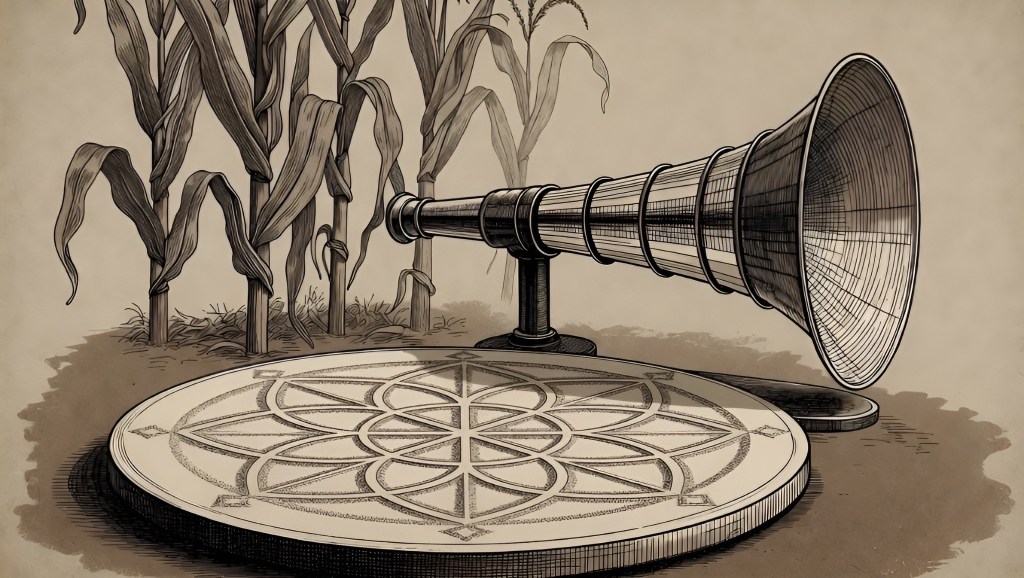
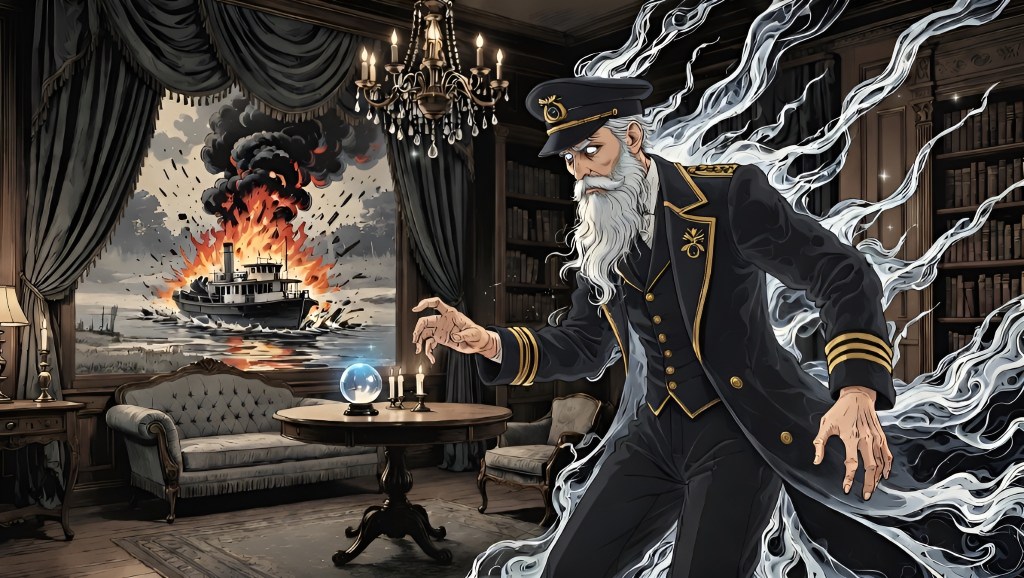
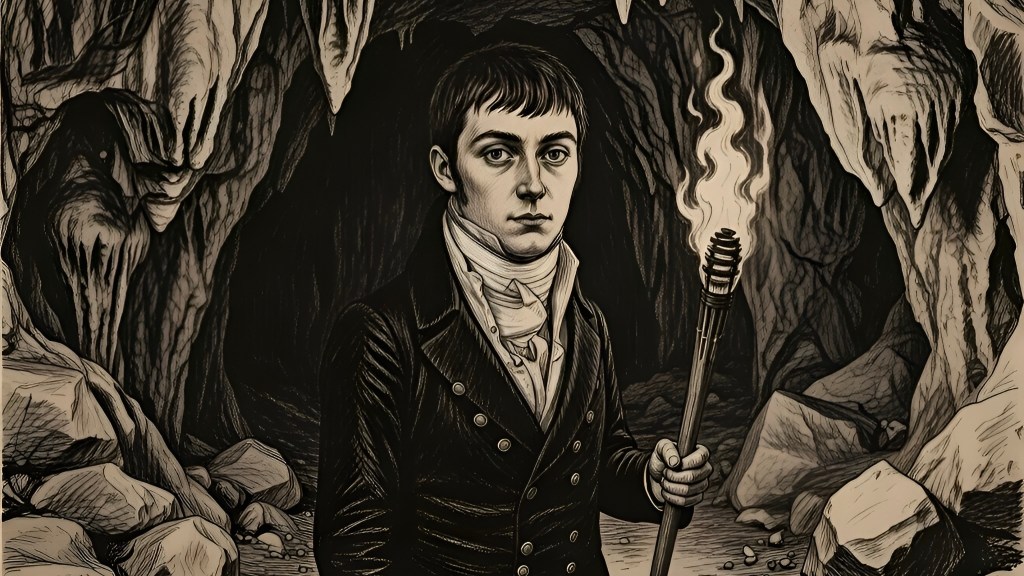
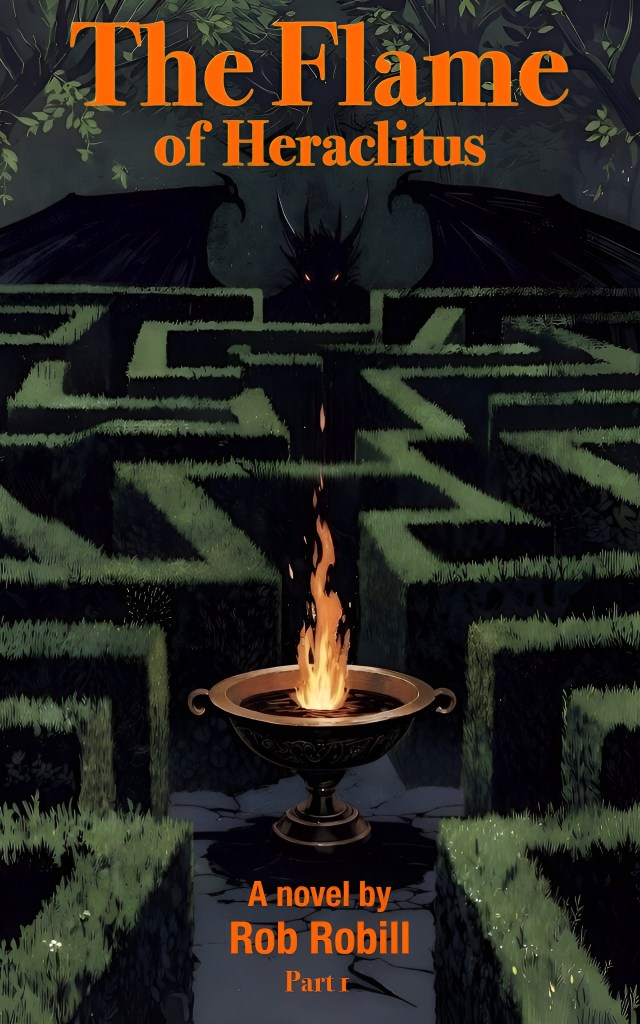
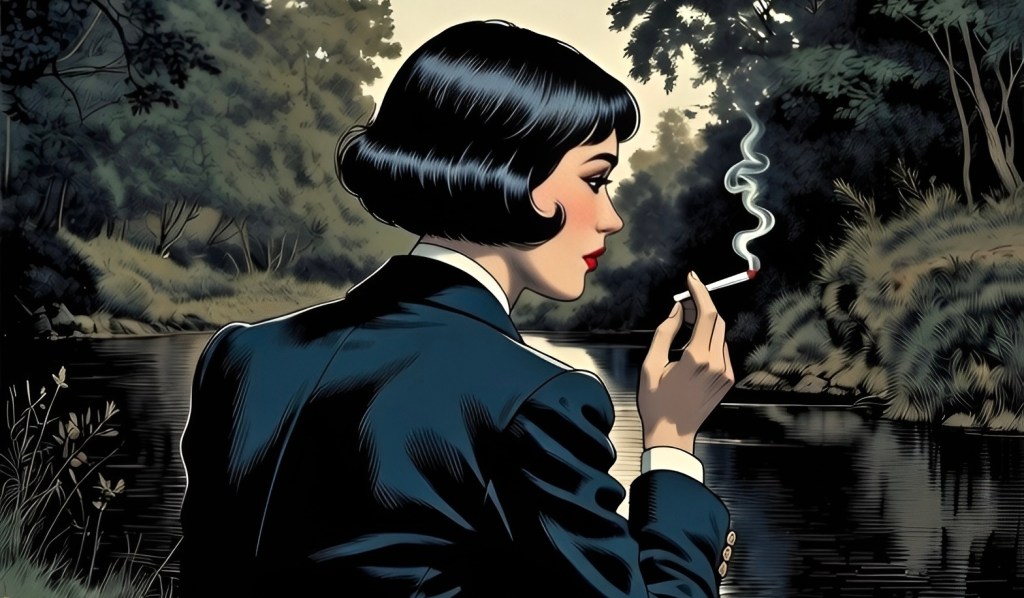
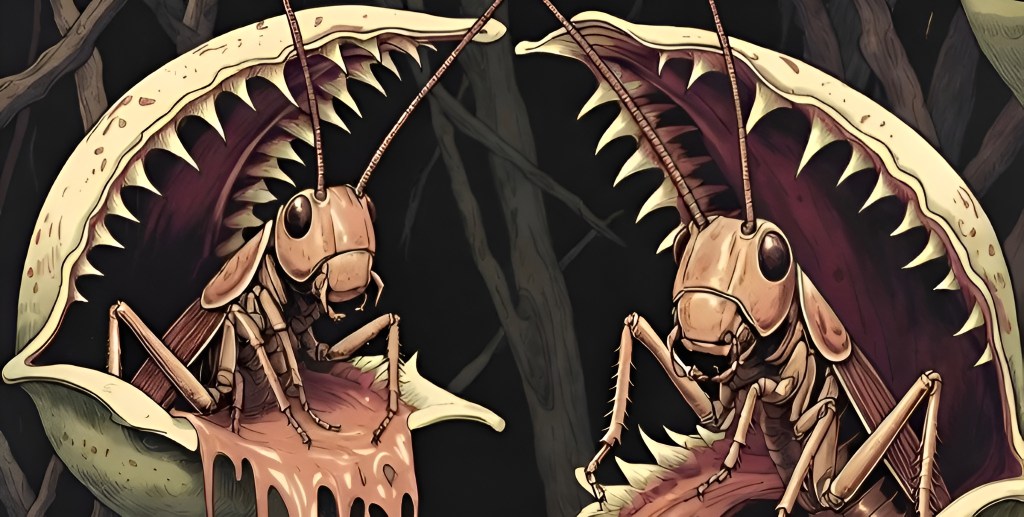
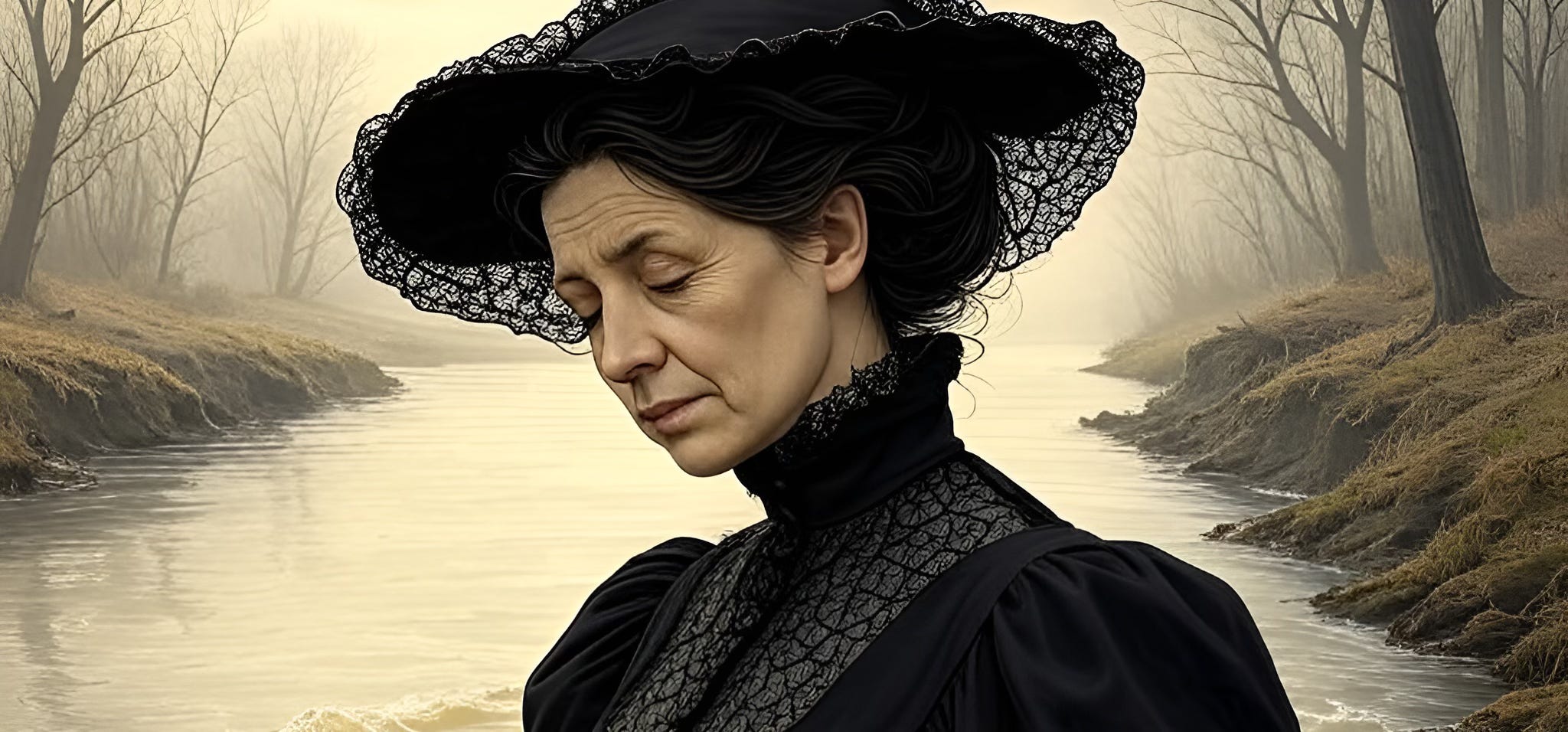

 Rob Robill